

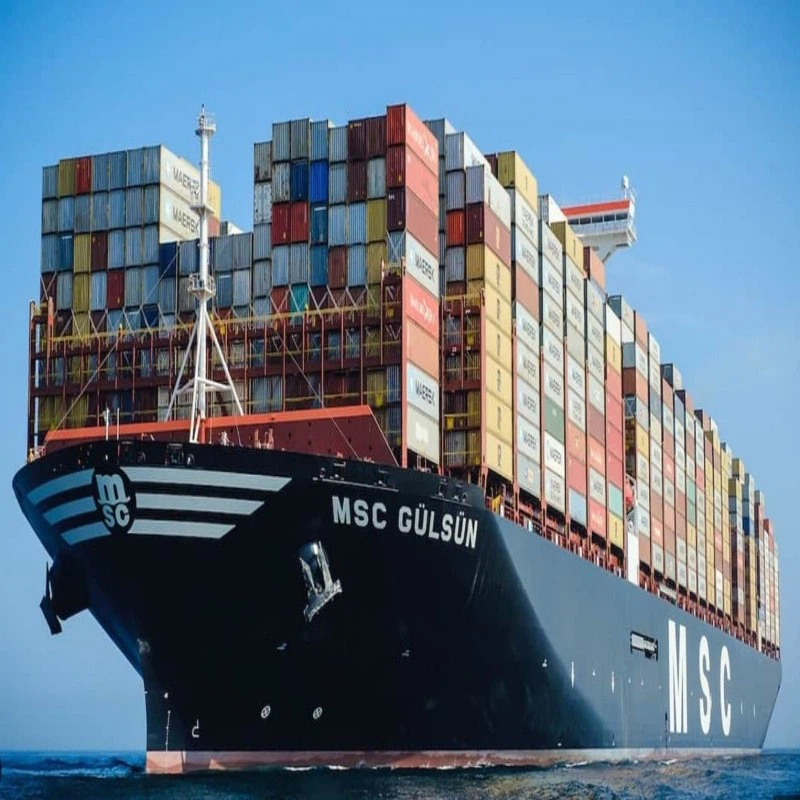
LCL (Less than Container Load) export shipping from China provides a shared-space ocean freight solution for commercial importers moving small to medium cargo volumes (typically 1 to 15 CBM) that do not require a full 20ft or 40ft container (FCL). By consolidating multiple shipper consignments into a master container at origin Container Freight Stations (CFS), this service enables regular cargo movement from major Chinese manufacturing hubs to global destination ports.
The operational scope covers factory gate collection, export customs declaration, origin CFS consolidation, ocean transit, and destination port de-consolidation under a unified transport document.
Key Service Features
Weekly Fixed-Day CFS Departures: Scheduled consolidation cycles aligned with major carrier alliances (THE Alliance, Ocean Alliance) providing predictable sailing schedules.
Multi-Supplier Buyer's Consolidation: Capability to receive cargo from disparate Chinese manufacturing plants, consolidate them at a central CFS warehouse, and issue a single consolidated Bill of Lading to simplify destination customs clearance.
Regulated Origin CFS Handling: Standardized palletization, stretch-wrapping, and container stowage protocols designed to protect mixed cargo against transit shifting, crushing, and moisture damage.
Milestone Cargo Visibility: Tracking visibility covering warehouse intake, customs release, vessel departure, and destination CFS availability.
Transparent Cost Architecture: Clear itemization of origin local charges (document fees, customs filing, CFS handling fees) to mitigate unexpected invoice variances.
Product-Specific Specifications
Chargeable Weight & Volume Basis: Freight is calculated using the standard maritime ratio of 1 CBM (Cubic Meter) = 1,000 KGS (Gross Weight). The billing basis applies whichever value (total volume or total gross weight converted to metric tons) yields the higher figure.
Accepted Commodity Types: General commercial goods, textiles, non-hazardous hardware, certified consumer electronics (non-lithium or battery-compliant with MSDS), and industrial machinery spare parts.
Required Packaging Standards: Cartons must be heavy-duty, export-grade corrugated board. Loose cartons must be placed on ISPM 15 compliant heat-treated wood or plastic pallets suitable for multi-tier warehouse handling.
Service Delivery Terms: CFS-to-CY, CFS-to-CFS, and Door delivery options available subject to destination agent coverage.
Regulatory Compliance: Operated under NVOCC (Non-Vessel Operating Common Carrier) registration with FMC (Federal Maritime Commission) tariff filings for Trans-Pacific trades.
Shipping Process
Booking & Document Submission: Shipper submits Shipping Instructions (SI), commercial invoice, and packing list.
Cargo Intake / Domestic Trucking: Cargo is delivered to our designated origin CFS warehouse, or domestic pickup is arranged from the supplier's factory.
Measurement & Stowage: Warehouse operators verify dimensions (CBM), check gross weight, and execute master container loading and lashing.
Export Customs Declaration: Electronic filing of export declarations with China Customs; release confirmed prior to vessel cut-off.
Ocean Transit: Master container loaded onto feeder/mother vessel from port of loading (POL) to port of discharge (POD).
Destination Break-Bulk: Container arrives at destination CFS, un-stuffed, and cargo is released to the consignee or local customs broker upon Bill of Lading surrender and payment of destination local fees.
Cargo Requirements & Preparation
Pallet Specifications: Wooden pallets must carry the ISPM 15 stamp (heat-treated/fumigated). Maximum pallet height is restricted to 160cm-180cm to accommodate multi-tier container stacking.
Shipping Marks & Labeling: Every carton must display clear consignee marks, country of origin, and handling symbols (Fragile, Keep Dry, This Side Up) matching the commercial documents.
Restricted & Prohibited Cargo: Uncertified batteries, pressurized containers, chemicals without an approved MSDS, and counterfeit items are strictly prohibited. Chemical or fluid substances require an advance review of the Material Safety Data Sheet.
Shipping Routes & Transit Time
Trans-Pacific (North America West / East Coast)
POL: Shanghai, Ningbo, Shenzhen, Qingdao
POD: Los Angeles, Long Beach, New York, Savannah
Port-to-Port Transit Time: 14-22 days (West Coast), 28-38 days (East Coast)
Europe (North Continent / Mediterranean)
POL: Ningbo, Shanghai, Yantian
POD: Rotterdam, Antwerp, Hamburg, Genoa
Port-to-Port Transit Time: 28-35 days
Intra-Asia / Asia-Pacific
POL: Shenzhen, Shanghai, Qingdao
POD: Singapore, Port Klang, Bangkok, Manila
Port-to-Port Transit Time: 3-10 days
Required Information for LCL Quotation
To generate an accurate, binding rate quote, please provide the following technical parameters:
Detailed Packing List: Dimensions (length, width, height in cm/inches) and gross weight per carton or pallet.
Commodity Description: Exact product name and intended application (required for HS code classification and customs verification).
Incoterms: Agreed trade term (e.g., EXW, FCA, FOB).
Origin & Destination: Specific city or port of origin in China and destination port or postal code (for door delivery).
Special Handling Needs: Stackability limits, temperature sensitivity, or battery containment status.
Frequently Asked Questions
Request a Quote
Submit your cargo dimensions, packing list, and destination details to our logistics team for route assessment and rate calculation.
Email: [Insert Email Address]
Inquiry Portal: [Link to RFQ Form]
Target Response Window: Within 4 business hours for standard commercial inquiries.
Hot Tags: lcl export shipping from china, China lcl export shipping from china company, Agent Sea Freight, Consolidated Sea Freight, Door To Door Sea Freight, Sea Cargo International, sea freight, Sea Ocean Shipping


