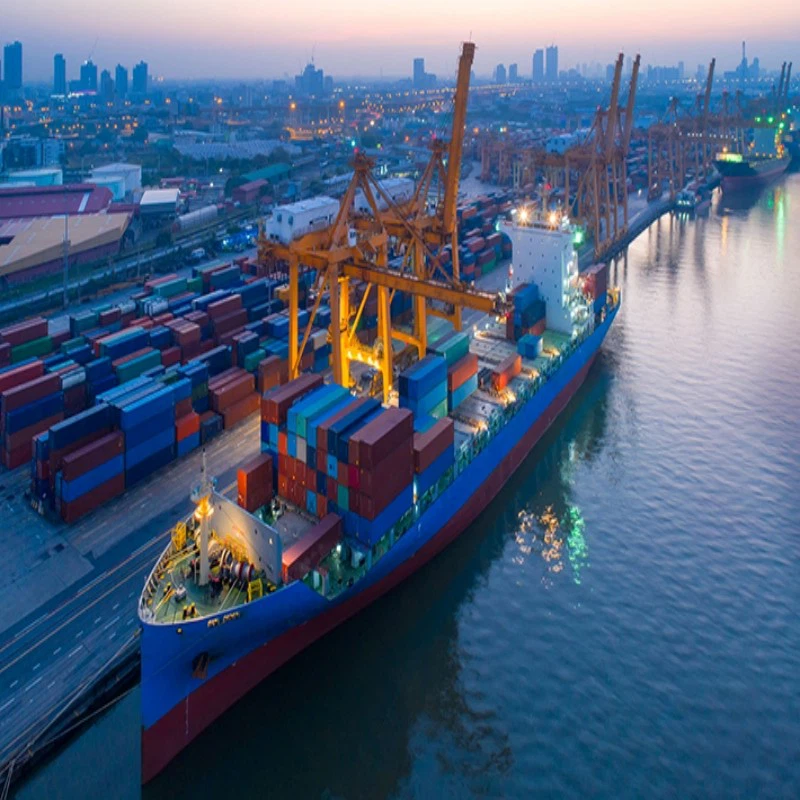
Recently, China officially unveiled the world's first hydrogen-powered container ship, marking a significant step forward in the shipping industry's transition to a green and low-carbon future. This innovation not only represents a technological breakthrough for China's shipping sector but also provides a powerful example for sustainable development in global maritime transportation. As one of the largest shipping nations in the world, China continues to lead the way in promoting green initiatives within the industry.
The hydrogen-powered container ship was jointly developed by China State Shipbuilding Corporation (CSSC) and Shanghai Waigaoqiao Shipbuilding Co., Ltd., utilizing hydrogen as its primary fuel source and featuring an advanced fuel cell system. Compared to traditional oil-powered vessels, hydrogen-powered ships greatly reduce carbon and pollutant emissions. Hydrogen combustion only produces water vapor, releasing no greenhouse gases or harmful substances, offering a practical solution to reducing the environmental impact of the shipping industry.
The ship's design incorporates modern shipping requirements, ensuring good speed and cargo capacity while using a lightweight hull structure to improve the efficiency of hydrogen utilization and overall performance. The hydrogen-powered container ship not only meets the growing demand for low-carbon, environmentally friendly transportation but also aligns with the global trend of green transformation in the shipping sector.
The shipping industry has long been one of the largest sources of global carbon emissions. According to the International Maritime Organization (IMO), the sector accounts for approximately 3% of global carbon emissions annually. With increasing global concern for environmental protection and sustainable development, the research and application of green shipping technologies have become crucial for the industry's transition. Hydrogen, as a clean energy source, holds vast potential for replacing traditional fossil fuels. It can significantly reduce greenhouse gas emissions and drive the global shipping industry toward a greener and low-carbon future.
The launch of China's first hydrogen-powered container ship not only showcases China's innovation in green technology but also accelerates the global shift toward sustainable shipping practices. As related technologies continue to mature, hydrogen-powered vessels are expected to play a larger role in international routes and long-distance transportation, having a profound impact on the global shipping industry. Meanwhile, China's hydrogen energy industry chain is rapidly developing, covering key areas such as hydrogen production, storage, and refueling facilities, providing comprehensive technical support and services for shipping companies. The improvement of this industry chain will lay a solid foundation for the widespread adoption of hydrogen-powered vessels.
With the growing demand for environmental sustainability in global shipping, the market prospects for hydrogen-powered ships are becoming increasingly promising. By 2030, the global hydrogen-powered shipping market is expected to reach hundreds of billions of dollars, becoming a critical component of the industry's transformation. China's pioneering move not only provides a technological reference for the global shipping industry but also injects new momentum into the development of green shipping worldwide.
The introduction of China's first hydrogen-powered container ship marks a new phase in the green transformation of the shipping industry. As more innovative technologies emerge, hydrogen-powered vessels are expected to become the dominant form of propulsion in global shipping, driving the industry toward a more environmentally friendly, low-carbon, and sustainable future.