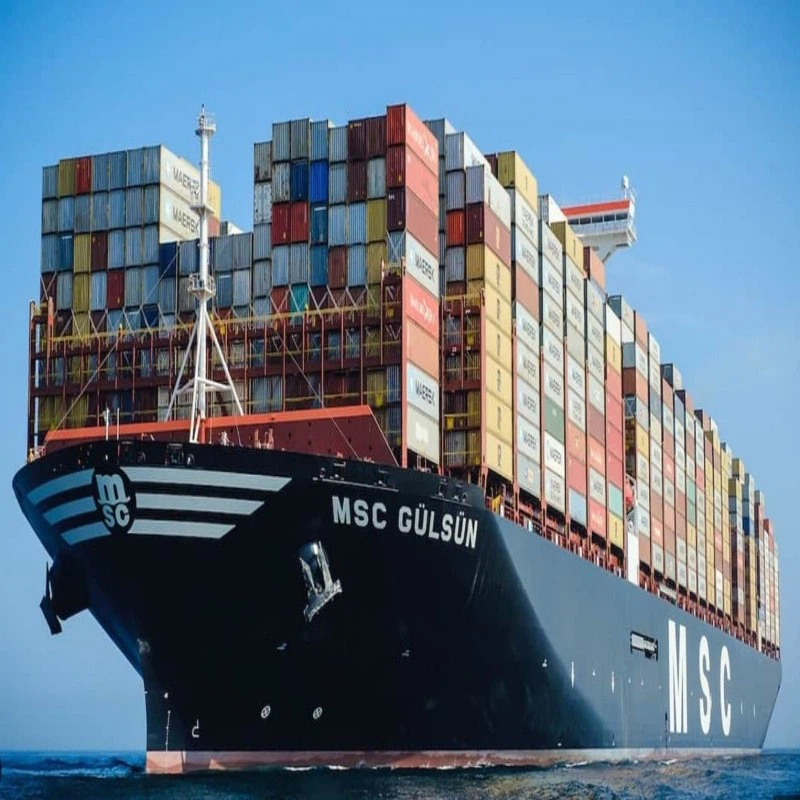
If you ship cargo out of India, you've probably noticed something shifting lately. The vessels are getting bigger. The service loops are multiplying. And the space that used to feel tight is slowly starting to open up - at least on paper.
Carriers have clearly smelled the opportunity. Across the ex-India ocean trades - India to the Middle East, India to Europe, India to the US East Coast, and the feeder lanes that connect them - new capacity is being poured in. Not because the market is suddenly flush with empty ships, but because India's export story is finally getting the attention it deserves.
The Growth Story Behind the Ships
Let's be honest about why this is happening. India has spent years building out its manufacturing base, upgrading port infrastructure, and positioning itself as a genuine alternative for supply chains looking to reduce dependence on a single country. That work is starting to show up in the cargo numbers.
Exports are broadening beyond the traditional commodities. Electronics, auto components, engineering goods, pharmaceuticals, and high-value consumer products are all moving in greater volumes. And the ports are responding. New terminals, deeper drafts, better rail connections, and faster customs processes are making Indian gateways more competitive than they were just a few years ago.
Carriers aren't blind to that. When a trade lane shows sustained growth, they add capacity. That's exactly what's happening now. New services are being launched. Vessel sizes are being upsized. And some of the tonnage that would normally have gone to more established east-west routes is being redirected toward India-linked trades.
For shippers, that should be good news. More capacity generally means more options, better schedules, and a healthier negotiating position.
But More Ships Don't Fix Everything
Here's the catch. Adding capacity to a trade lane is one thing. Making that capacity actually work for your cargo is another.
India's port and inland infrastructure is improving, but it's still uneven. Some gateways handle larger vessels smoothly. Others struggle with yard congestion, equipment shortages, and slow hinterland connections. Documentation requirements can vary from port to port. And during peak export seasons, reefer plugs, empty containers, and trucking capacity can tighten quickly.
Then there's the global picture. Red Sea diversions are still absorbing vessel capacity. Port congestion in other parts of Asia and Europe can ripple back into Indian schedules. And carriers, even while adding capacity, are still managing it carefully through blank sailings and service adjustments. More ships on the lane doesn't automatically mean more space for your shipment on the week you need it.
So while the capacity injection is welcome, it doesn't remove the need for a logistics partner who actually knows how to navigate the lane.
Where a Real Partner Makes the Difference
At Xiamen AE Global, we've been helping clients move cargo through complex trades since 2018. We're a government-licensed forwarder with IATA, FIATA, FMC, and NVOCC credentials - which, in practical terms, means we can talk directly to carriers, terminals, and customs authorities instead of waiting in a queue behind someone else.
When carriers add capacity to ex-India trades, the difference between getting your cargo on a vessel and watching it get rolled usually comes down to relationships. We work with a broad network of overseas agents, and those aren't just names on a directory. They're the people who tell us which service is genuinely full, which port is quietly backed up, and which gateway still has room.
1. We Control Consolidation In-House
Not every forwarder can say this, but it matters: we manage LCL consolidation ourselves. That means we're not handing your shipment to a third party and hoping it gets prioritised. We control the container planning and the space allocation. When equipment gets tight - as it often does during peak export periods - that control is the difference between a confirmed booking and an apology email.
2. We Can Move the Mode, Not Just the Booking
When ocean schedules on a lane get complicated, the answer isn't always "book earlier" or "pay more." Sometimes it's a different port. Sometimes it's a rail leg. Sometimes it's sending the time-critical portion of a shipment by air through our IATA-certified team while the rest follows by sea. Because we operate across sea, air, and rail, we can weigh those options in the same conversation - rather than telling you to come back when the vessel has sailed.
3. Visibility That Arrives Before the Problem Does
Our digital tools aren't there to give you a prettier tracking page. They're there so that when a sailing is blanked, a surcharge lands, or a terminal pushes back its gate, you hear it from us with options attached. The worst version of this market is the one where you find out about a change after your cargo is already sitting in a yard. We work hard to make sure that isn't how you experience it.
4. Local Knowledge, Global Reach
Based in Xiamen - one of Asia's busiest port cities - we pair global network access with the kind of ground-level understanding that only comes from over a decade of moving all kinds of goods. We've built a strong on-time record for our SME clients, not by promising the moon, but by knowing the lanes, knowing the partners, and knowing how to react before the market forces your hand.
The Bottom Line
Carriers are adding capacity to ex-India trades because they see growth. That's a positive signal for anyone shipping out of India - more ships, more services, more competition. But capacity on paper doesn't always translate into space for your cargo, especially when port congestion, equipment shortages, and schedule changes are still part of the picture.
At Xiamen AE Global, we don't just move boxes. We help our clients take advantage of growing trades like India's - with real carrier relationships, in-house consolidation control, multi-modal flexibility, and visibility that lets you plan instead of react.
Because when a trade lane is heating up, you don't need a spectator. You need a partner who knows how to get your cargo on the right ship, at the right time.
Shipping out of India or exploring new routing options? Contact Xiamen AE Global today - and let's make sure your cargo keeps moving.