


Our Company
Welcome to XIAMEN AE GLOBAL, a government-licensed and IATA, FIATA, FMC, and NVOCC-approved company. Since our foundation in 2018, we have been a leading provider of transportation and logistics services in China. With a network of over 100 overseas agents, we handle a comprehensive range of services, including airfreight, ocean freight, courier, customs clearance, warehousing, and project & break bulk shipments.Backed by more than 10 years of experience in the freight forwarding and logistics industry, XIAMEN AE GLOBAL operates with a commitment to professionalism, honesty, and sincerity. We aim to be a reliable business partner, providing exceptional service to help your business thrive in today's competitive market.
Why Choose Us
Company Strength
With a network of over 100 overseas agents, we handle a comprehensive range of services, including airfreight, ocean freight, courier, customs clearance, warehousing, and project & break bulk shipments.
Rich experience
Backed by more than 10 years of experience in the freight forwarding and logistics industry, XIAMEN AE GLOBAL operates with a commitment to professionalism, honesty, and sincerity. We aim to be a reliable business partner, providing exceptional service to help your business thrive in today's competitive market.
Our Services
Expertise in major ports: Xiamen, Fuzhou, Shanghai, Ningbo, Shenzhen, and Guangzhou.ATA/Personal effects/Air shipment management.Comprehensive handling of FOB to CIF transactions, including switch MBL and HBL.Assistance with Certificates of Origin, Form A, Document Legalization, BV, SGS, and more.Door-to-door delivery.
Warehouse consolidation
Receiving and consolidating cargo from various suppliers into the same container.Our warehouse can serve as your storage and distribution hub in China, organizing and delivering your goods as per your requirements.

We have extensive experience in handling door to door sea freight from China to the world, we offer the best shipping rates for any kind of transported goods, and we are very familiar with the paperwork and documentation required by customs.

About the sea freight to door service,The USA all port we can provide the door to door service.

We have privode the all china port shipping cars by sea service,if you need cars service,you can sent MSDS,my partner the OOCL/YML/ONE can use it..

We are providing you with the most flexible, cost-efficient and fully coordinated sea cargo international solutions Our sea cargo international service is here to ensure your cargo reaches the right place, at the right time, in the most economical way-without the need to compromise on quality or reliability.

In this world of technology and automated systems, personal contact is paramount. At our global sea fright service, we build relationships with those people forming part of your worldwide logistics chain to ensure that your cargo moves smoothly, on time and within budget.

We provide the best solutions and service delivery for consolidated sea freight from China. With our consolidated sea freight services that can deliver your goods from China to any destination worldwide, and we can provide you with fast, affordable and reliable sea freight and delivery of your goods.

Agent Sea Freight has a wide range of business and many clues, which makes it difficult for any carrier (shipping company) or cargo owner to personally handle the specific business of each link in the transportation business, and many tasks need to be handled by an agent.

If you need your package delivered to its destination quickly, choose us for fast, reliable express sea freight. Relying on professional international experience and customs clearance skills, we can ensure that your door-to-door delivery arrives quickly in the right time

About the DDU DDP SEA FREIGHT, DDU, means Delivery Duty Unpaid, whether your supplier is in Shanghai, Shenzhen, Guangzhou or any other place in China, you can just wait for your goods at home, but only one thing you need to take care, you need to pay the duty and VAT.
What is Usa Sea Freight
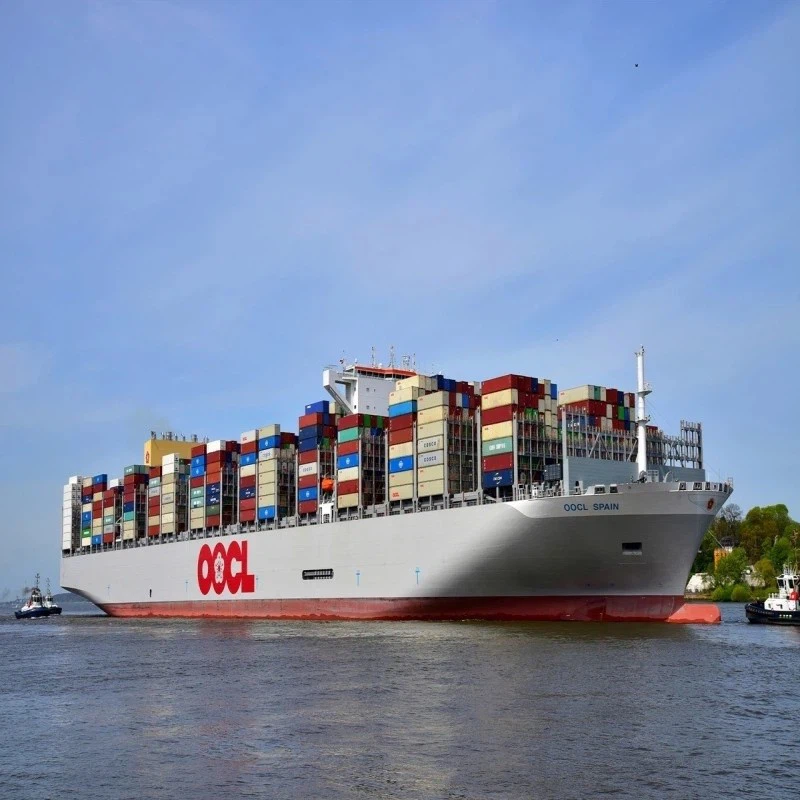
Usa sea freight is a type of shipping large quantities of goods using carrier ships. It is an important part of cross-border trade and enables people to shipping large quantities of goods between countries. Goods are loaded into containers and then loaded onto ships. A typical cargo ship can carry around 18,000 containers, which means that sea freight is a cost-effective way of transporting large volumes over long distances.For different types of cargo, there are a number of transport options available. One of the most popular is container transport, technically known as containerisation.
Cost-Effectiveness of Ocean Freight
In contrast to alternative transportation methods like airfreight, ocean freight is typically more budget-friendly. The economies of scale associated with shipping large volumes of goods on cargo ships result in lower transportation costs per unit. Consequently, businesses can achieve substantial savings in shipping costs, permitting them to redirect resources to other aspects of their operations.
Impact on Business Profitability
Due to the cost-effectiveness of ocean freight, businesses can maintain competitive pricing for their products in the global market. Lower transportation costs translate into higher profit margins, allowing businesses to reinvest in their operations, expand their product offerings, or provide better value to their customers. This improved profitability can lead to long-term business growth and success.
Sustainability Initiatives in Ocean Freight
The ocean freight companies recognizes the importance of sustainability and has made efforts to improve its environmental performance. Shipping companies are adopting cleaner technologies, optimizing routes to reduce fuel consumption, and exploring alternative energy sources such as wind and solar power. Additionally, there is increasing focus on reducing waste and enhancing recycling practices in the industry.
Environmental Impact of Ocean Freight
While ocean freight services offer economic advantages, it is essential to consider their environmental impact and the industry's commitment to sustainability.
Emission Rates Compared to Other Freight Services
Compared to airfreight and road transportation, ocean freight has a lower carbon footprint. Ships emit less greenhouse gases per unit of cargo transported, making it a relatively environmental-friendly option for global trade. However, it is crucial for the industry to continue implementing environmental-conscious practices to minimize its overall impact on the planet.
Safety and Reliability of Ocean Freight
One of the key considerations in choosing a mode of transportation is safety and reliability. Ocean freight services excel in these aspects, providing businesses with peace of mind when it comes to shipping their goods.
Types of Usa Sea Freight
Roll on/roll off (RoRo) freight is the name given to any type of cargo transported using a RoRo vessel. This type of freight largely consists of everyday vehicles like cars and trucks. However, RoRo goods can include other kinds of vehicles, each with very unique purposes.
Break bulk cargo is a form of cargo that typically can't be transported within a regular cardboard box or cargo container. Instead, break bulk items are kept in other types of containers while they're being transported from port to port. General cargo ships are the vessels of choice when it comes to transporting break bulk freight overseas. This break bulk cargo is convenient to ship because it rarely has to be broken down. Because of this, unloading doesn't require reassembling once the freight arrives at the final destination.
Dry bulk cargo is made up of dry goods that are transported "loosely" or without any type of container. Instead, this type of freight is stored within the cargo hold of a dry bulk carrier during transit. Because dry bulk cargo doesn't fit into a box or any other type of container, the loading/unloading process is very unique. The loading/unloading of dry bulk freight can be completed in one of two ways:Dry bulk goods are dumped using a clamshell bucket. For unloading, the clamshell bucket scoops the product from the cargo hold.
Liquid bulk freight shares many similarities with dry bulk freight. For one, this type of cargo isn't transported within the confines of bottles or similar types of containers. This form of cargo is shipped "loosely" within the confines of tanker ships. Using various lines and hoses, tanker ships are loaded and unloaded by pumping liquids in and out of the cargo hold.
The most common type of freight that goods transported by sea fall under is container cargo or containerized freight. Cargo containers are usually stacked wall to wall and from floor to ceiling with palletized or non-palletized freight.Other types of goods, like certain cars and trucks, can be transported within containers as well. This makes for a great alternative if you don't want to ship your vehicle as RoRo freight. Temperature-sensitive goods can be transported in reefer containers.

Sea freight can be utilised by a wide range of businesses and industries. However, it is particularly favoured by industries that need to transport large volumes of goods or bulky, heavy items that are not economically viable to send by air.
Industries such as mining, manufacturing, automotive, agriculture, and electronics regularly rely on sea freight for their logistic needs due to their capacity to handle large-scale shipments efficiently.
Calculating Sea Freight Costs
Step 1-Measure Dimensions and Weight
Firstly, measure the length, width, and height of your cargo to find its volume. Multiply these dimensions to get the volume in cubic meters (m³). Also, find the cargo's weight in kilograms (kg) or metric tons.
Step 2-Determine Chargeable Weight
The chargeable weight is the higher value between the actual weight and the volumetric weight. Calculate the volumetric weight by multiplying the cargo's volume (in m³) by the carrier's conversion factor. If the sea freight costs are based on volume, you still need to convert the larger weight into volume.
Step 3- Find Freight Rates
Contact shipping carriers or freight forwarders to get current rates for your shipping route. Rates can differ based on origin, destination, shipping line, container type, and service level.
Step 4-Calculate Total Freight Charges
The last step is to multiply the billing unit by the freight rate per kilogram (kg) or per CBM to get the freight cost. Include any additional fees such as fuel surcharges, terminal handling fees, or customs duties to find the total cost.
Budget
In most circumstances, sea freight has always been the cheaper option among the two. In fact, one study suggests that air freight is priced 12-16 times higher than sea freight. A $100 sea shipment will at least cost $1200 by air.But there is a catch. This difference is substantial only when the weight of your cargo is high. For sea freight, when a package is small and less than a full container's load, its cost is calculated in cubic meters. A lot of times, this can actually cost a lot more than air freight for the same package.
Timeline
Air freight is a clear winner in this department. It can deliver your goods in a matter of a few days or weeks, while sea freight will often require 4-6 weeks. Although many 'express sea freight' options have been introduced in recent times, they are still no match to air freight.
Amount of cargo
Look at the above image. This is MSC Irina, the largest cargo ship in the world that can carry 24,346 twenty-foot equivalent units of cargo. In layman's terms, the ship can carry 24,346 20-foot containers. Each standard 20-foot container has 1,172 cubic feet of volume. Now, do the math for 24,346 containers. Mind-boggling, right?The capacity of air freight is just a fraction of this. The Boeing 747 is one of the largest aircraft in the world. When you configure this plane as a freighter, it can hold only about 26,000 cubic feet of cargo.
Environmental impact
The environmental impact of sea freight versus air freight typically revolves around factors like fuel consumption, emissions, and overall sustainability. In general, sea freight tends to have a lower carbon footprint per ton of cargo transported compared to air freight. This is because airplanes release more greenhouse gases during transport.
Cargo safety
This is one of the few factors that doesn't have a clear winner. Ultimately, it depends on the risk profile of your products and how well it is handled during loading and unloading processes.One school of thought suggests that sea freight carries a higher risk of damage or theft because goods typically undergo multiple handlings before reaching the destination. In air freight, cargo is less likely to be mishandled and more closely monitored, thereby reducing the risk of damage. Airports have thorough security measures that guard against intruders and theft. So, for small-volume goods of higher value, air freight might actually be a better choice.
Restriction on type of cargo
Both sea freight and air freight come with their own set of restrictions. The extent of limitations can also vary depending on factors like cargo type, regulations, and destination. However, if you compare in terms of overall flexibility, sea freight seems to have an edge here.Air freight tends to have a lot more restrictions when compared to sea freight. We are not talking only about the stringent security measures at airports or weight limitations set by air cargo carriers.
Process of Concluding Sea Freight
Export Haulage
This is the beginning of the transport journey. At this stage, your goods will be shipped from the seller's warehouse to your forwarder's warehouse.
Export Customs Clearance
Most countries require that exported goods go through customs clearance first. Customs clearance will include providing a detailed declaration of the goods along with supporting documents.
Origin Processing
This phase covers all the activities required to prepare the goods for transport. Goods will be placed in the staging area for inspection and confirmation. After confirmation, the forwarder will issue a receipt for the shipment confirming that they have received the shipment as stated. If the goods are full containers, the goods will be stacked in their containers. In the case of LCL, they are placed in warehouses waiting to be combined with other cargoes in containers bound for the same port of destination. Finally, the container will be trucked to the departure port for loading.
Sea Freight
This is the actual shipping of goods across oceans. The stage to this point can take days or weeks, depending on several factors. The sea freight itself may take 20-60 days, depending on the destination of the goods.
Import Customs Clearance
After the goods arrive at the port of destination, wait for import customs clearance. It also includes filling out the necessary forms, declaring the goods and paying the necessary fees.
Destination Processing
This stage covers all the activities required to confirm the cargo, check the documents including the bill of lading and transport the container to the freight forwarder's warehouse. Here, shipments are opened, inspected, and sorted for inbound transport.
Import Transportation
This is the final stage of the process. At this stage, the cargo will be transported inland by train or truck to your final destination determined by you.
3 Ways to Prevent Usa Sea Freight Delivery Delays
Always maintain an overview of the container
Studies have shown that almost every second industrial company experiences difficulties with disruptions and errors in the supply chain. Delays are most common at interfaces in the logistics network, such as between external partners or different departments like transport and storage.Supply chain management plays a major role in preventing problems with sea freight delivery. Companies such as are working to develop smart solutions for representing the supply chain. By consolidating reliable sea freight data, they're able to accurately forecast delivery times.
Prepare for seasonal challenges
Seasonality affects virtually every industry, causing extreme fluctuations in demand leading to delays every year.Chinese New Year is one of the biggest causes of sea freight delivery delays. This is not celebrated on 1st January, but is based on the lunar calendar and lasts for around 15 days. Most companies and factories in China close during this period. As a result, the volume of sea freight usually increases sharply before this period and there is more container traffic at the ports.
Make sure you have a Plan B
Container ships have changed the way we transport goods around the world. Sea freight has clear advantages as a mode of transport: it's usually the most cost-effective option, especially with large quantities and long distances. On the other hand, the transport times are longer and once it's in the ocean, there's nothing you can do to move it any faster.Therefore, it is always good to have a Plan B and to choose other modes of transport for certain goods. For example, if you're handling an extremely time-sensitive shipment and your sea route is congested, consider shelling out for air freight.
Company Services


FAQ
Hot Tags: usa sea freight, China usa sea freight company, Ocean Lcl Shipping, Shipping Cars By Sea, Amtrak Shipping Alternatives, Air Cargo Delivery, Door To Door Air Freight, Plus Cargo Global Forwarder


