Introduction: The Core of Global Trade
In today's interconnected global economy, getting your products from point A to point B isn't just a logistical task-it's a critical business decision that can make or break your bottom line. If you're weighing the pros and cons of different shipping methods, you've likely found yourself stuck between two fundamental choices: air freight vs sea freight.
This isn't about finding a "one-size-fits-all" solution. Rather, it's about understanding how each method serves different business needs, timelines, and budgets. As an SEO specialist working with a logistics company, I've seen how the right information can transform supply chain decisions.
Let's cut through the industry jargon and break down the real differences between these transportation giants in plain business terms.
What Exactly Are We Comparing?
Before diving into comparisons, let's clarify what we're talking about.
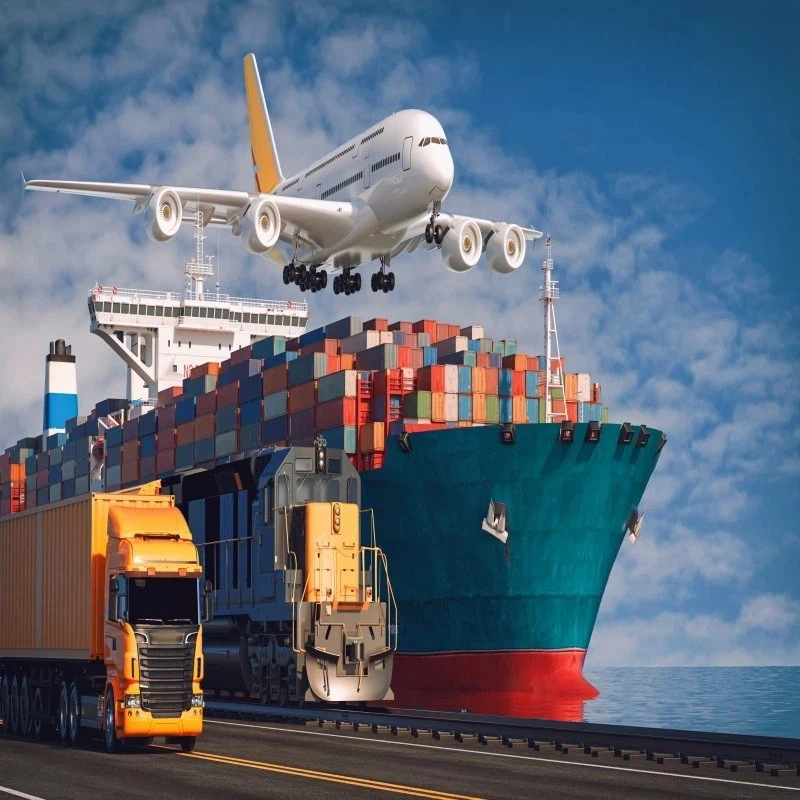
- Air freight refers to transporting goods using commercial or cargo aircraft. It's characterized by airport-to-airport movement, followed by customs clearance and local distribution at the destination.
- Sea freight involves transporting goods via cargo ships through port-to-port movement, often supplemented by rail or truck for final delivery.
- At its simplest: planes are fast but expensive, ships are slow but cheap. But the reality is more nuanced, and the best choice depends entirely on your specific situation.
The Speed Factor: When Time Is Money
Air Freight: The Express Lane
If your supply chain has a heartbeat, it probably races with air freight. The numbers speak for themselves:
Transit time: 1-5 days for most international routes
China to US West Coast: 3-5 days
China to Europe: 1-3 days
But the speed advantage extends beyond just flight time. Air cargo often receives priority customs treatment with "green channel" access, clearing in 1-2 days compared to 3-4 days for sea freight. At some major airports, you might even benefit from "6-hour express clearance".
Bottom line: Air freight isn't just transportation-it's a business continuity strategy for time-sensitive operations.
Sea Freight: The Patient Approach
Sea freight operates on a different timeline entirely:
China to Europe: 30-40 days
China to US West Coast: Approximately 14 days
China to US East Coast: Up to 25 days
These timeframes aren't just estimates-they're planning parameters. Successful sea freight shippers build these lead times into their inventory management, often reducing safety stock costs by 20-30%.
Cost Analysis: Beyond the Price Tag
Sea Freight: The Economy of Scale
Sea freight's strongest selling point is undeniable: cost efficiency. Consider these comparisons:
A 20-foot container from Shanghai to Los Angeles costs about $1,500-$2,000-just ⅕ to ⅓ of equivalent air freight costs
Shipping 100kg of goods via air might cost around $700, while sea freight for the same goods might be only $140-a five-fold difference
The secret lies in scale. Massive container ships spread operational costs across enormous volumes, creating unbeatable per-unit economics for large shipments.
Air Freight: The Premium for Speed
Yes, air freight is more expensive. But the question isn't "how much does it cost?" but "what does this cost include?"
Air freight pricing uses the chargeable weight concept, charging based on either actual weight or volumetric weight-whichever is higher. This can make lightweight but bulky items surprisingly expensive to ship by air.
As a general rule, air freight becomes economically viable when transport costs represent less than 15-20% of the goods' value. Beyond this threshold, the speed advantage may not justify the premium.
Practical Considerations: What Can You Ship?
Air Freight Limitations: Safety First
Air freight maintains strict regulations for obvious safety reasons. Common restrictions include:
- Gases (including seemingly harmless items like light bulbs)
- Flammable substances (including perfumes and certain chemicals)
- Magnetic materials (such as speakers)
Many types of batteries
There are also practical size constraints. Individual air freight pieces typically can't exceed 30kg or certain dimension limits. If your products are particularly large, heavy, or hazardous, air might not even be an option.
Sea Freight: Almost Everything Fits
Sea freight's capacity advantage is staggering-a single container can hold up to 10,000 bottles of beer. This method accommodates:
- Oversized and heavy items (industrial machinery, construction materials)
- Liquid and battery products (with proper declaration)
- Ton-weight cargo that would be impossible to ship by air
The flexibility comes with paperwork, though. Sea shipments often require more documentation and may need to comply with regulations like AMS (Anti-Terrorism Manifest System) for US imports.
Reliability and Safety Metrics
Air Freight: Precision and Protection
The aviation industry runs on precision, and air freight benefits from this culture:
- Flights follow strict schedules with multiple daily departures on major routes
- Enhanced security measures and advanced tracking capabilities
- Cargo damage rate of just 0.12%-significantly lower than sea freight's 0.85%
For high-value electronics, pharmaceuticals, or sensitive equipment, this reliability can justify the cost premium.
Sea Freight: Navigating Uncertainty
Sea freight faces more variables: weather patterns, port congestion, and complex logistics can all cause delays. However, the industry has made significant reliability improvements through:
- Faster vessels and optimized routing
- Enhanced marine tracking capabilities
- Rapid sea freight services with guaranteed delivery dates on certain routes
The risk of damage or theft is slightly higher due to longer transit times and multiple handling points, but proper packaging and insurance mitigate these concerns.
Environmental Impact: The Carbon Question
In an increasingly eco-conscious business landscape, environmental considerations matter.
Sea freight is significantly more environmentally friendly, producing approximately 1/30th the CO2 emissions of air freight per kilogram of cargo.
For businesses prioritizing sustainability or measuring carbon footprints, this difference can be a deciding factor. As consumers grow more environmentally aware, this advantage becomes increasingly valuable.
Making the Choice: A Practical Decision Framework
So when should you choose each option? Here's a straightforward guide:
Choose Air Freight When:
Time sensitivity is critical (seasonal products, urgent orders)
You're shipping high-value, low-weight commodities
You need quick market response (new product launches, stock outages)
Products have short shelf lives (fresh food, flowers, pharmaceuticals)
Speed and security outweigh cost considerations
Choose Sea Freight When:
You're shipping large, bulky, or heavy items
Cost efficiency is your primary concern
You have flexible delivery timelines
You want to reduce your carbon footprint
Dealing with non-perishable goods with long shelf lives
The Weight-Based Rule of Thumb
As a general guideline:
Under 50kg: Courier services often work best
50kg-500kg: Air freight may be most cost-effective
Over 500kg: Sea freight typically offers the best value
Beyond Either/Or: Hybrid Solutions
Many successful businesses don't choose one method exclusively-they use both strategically:
Emergency stock via air freight + regular inventory via sea freight
Combined transport using sea for long hauls and air for last-mile urgency
Multi-modal solutions that balance cost and speed across different supply chain segments
The most sophisticated shippers maintain flexible logistics strategies that adapt to changing market conditions, product cycles, and customer demands.
Conclusion: It's About Your Business Needs
The air freight vs sea freight debate has no universal winner-only what works best for your specific business context.
Air freight gives you speed, reliability, and security when every hour counts.
Sea freight offers unbeatable economics and massive capacity when time is on your side.
At XMAE Logistics, we understand that this decision affects your customer satisfaction, cash flow, and competitive edge. Rather than pushing a one-size-fits-all solution, we provide the transparent data and expert guidance you need to make informed decisions.
The right choice isn't about the cheapest rate or the fastest service-it's about the optimal balance for your unique business requirements.
Ready to optimize your international shipping strategy? Contact XMAE Logistics today for a personalized freight assessment that balances cost, speed, and reliability for your specific needs.