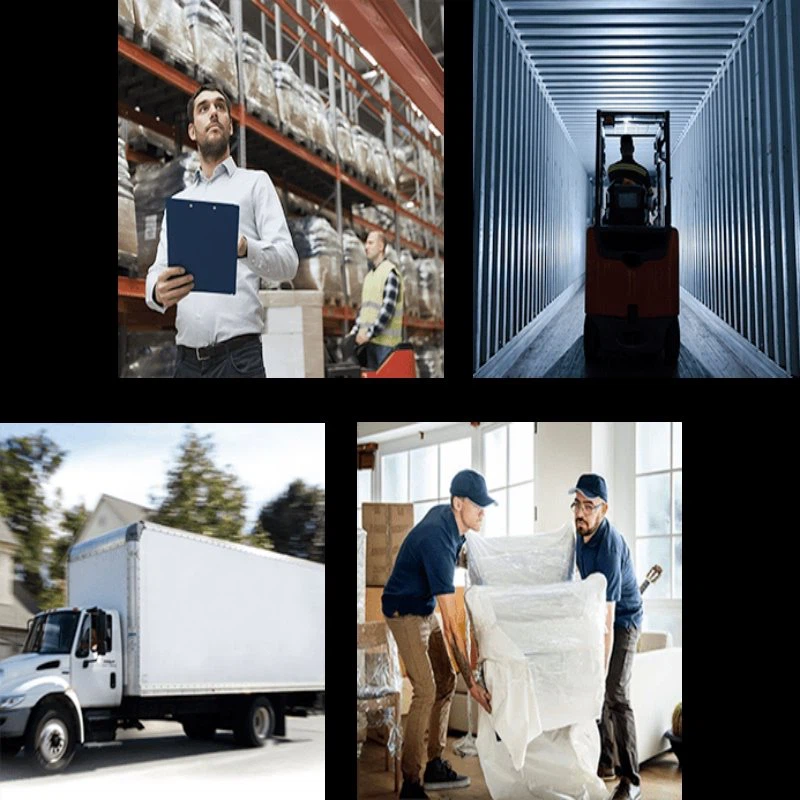
Ask ten people how fast last-mile delivery should be, and you'll get ten different answers. Two hours. Same day. Next day. Free shipping in three days.
But if you're shipping appliances-the heavy, bulky, installation-required kind-the conversation changes. Speed means something different when a 300-pound refrigerator is involved. And chasing the fastest possible delivery might actually be costing you more than you think.
Let's break down what "fast" actually looks like in last-mile delivery today, and why the smartest appliance shippers are rethinking what speed really means.
The Standard Timelines: What "Fast" Looks Like
Here's what the industry typically delivers across different service tiers:
|
Service Type |
Typical Timeframe |
|
Hyperlocal / Instant |
2–3 hours |
|
Same-Day Delivery |
4–8 hours |
|
Next-Day Delivery |
1–2 days |
|
Standard Delivery |
3–7 days |
For everyday parcels, these numbers hold up reasonably well. E-commerce giants have conditioned consumers to expect rapid fulfillment, and 93% of warehouse deliveries now occur within 48 hours of order placement. Same-day and next-day options have become table stakes in many markets.
But here's where it gets complicated.
The "Speed Penalty": Why Faster Isn't Always Better
There's a counterintuitive finding emerging from the last-mile industry, and it's worth paying attention to. FarEye's 2026 research-drawing on over 500 U.S. delivery operators and 3,000 data points-identified something they call the "speed penalty".
Operators who prioritize the fastest possible delivery report only 76% on-time performance and 24% median cost inflation. Compare that to operators focused on predictable delivery: they hit 88.4% on-time performance with just 10% median cost inflation.
Read that again. Chasing speed doesn't just cost more-it actually makes you less reliable.
Why? Because speed-first operations force rushed routes, premium carrier capacity, and compressed delivery windows that break under pressure. The research found a 104.5% increase in delays on shorter delivery promises, with a 1-in-22 miss rate on peak days versus 1-in-90 on wider windows.
Meanwhile, only 11.4% of operators now prioritize the fastest possible delivery. More than half-55.7%-prioritize predictable delivery or first-attempt success.
Why Appliances Are a Different Beast
Now let's talk about appliance delivery specifically. This isn't a parcel. This is white-glove territory.
Appliances are the most likely of all big-and-bulky categories to require installation. That means your delivery team isn't just dropping a box-they're navigating tight doorways, disconnecting old units, connecting water lines, and hauling away the old appliance. Service times swing from 40 minutes to over two hours depending on variables the planner didn't know about at dispatch.
And here's the critical insight: speed is not what appliance customers actually want.
FIU Business research found that for big-and-bulky purchases, white-glove service is the largest contributing attribute at 63%, followed by delivery window at 25%, and delivery speed at just 12%.
The lead researcher put it bluntly: "Counter to the so-called 'Amazon effect,' where we expect everything in 48 hours, with big and bulky items people prefer white-glove service of some sort over speed".
Customers aren't demanding you deliver a washing machine in two hours. They're demanding that you deliver it when you said you would, install it properly, and not damage their doorway in the process. When given the choice, customers tend to schedule delivery around seven to ten days after purchase-because large-item deliveries require planning.
The Cost Reality Check
Let's put this in financial terms. Last-mile delivery accounts for 41% to 53% of total logistics and shipping costs. For big-and-bulky deliveries-appliances included-that percentage sits at the higher end, with specialized handling, two-person crews, and installation expertise adding complexity.
And costs keep climbing. Median last-mile delivery costs rose 12% in 2026, matching the increase from the previous year. 60% of operators reported increases above 10%.
So when you're evaluating how fast your Forward Final Mile Appliance Delivery should be, the question isn't just "how fast can we go?" It's "what speed can we sustain profitably, reliably, and without damaging the customer experience?"
Where XMAE Logistics Comes In
This is exactly the kind of nuance that separates a good logistics partner from a transactional one. At XMAE Logistics, we don't just book space on a ship and wish you luck on the other end. We think about the entire journey-including that final, critical stretch.
Based in Xiamen with IATA, FIATA, FMC, and NVOCC approvals, we connect factory pickup in China to final delivery anywhere in the world. But what really matters for appliance shippers is this: we understand that Forward Final Mile Appliance Delivery isn't a commodity. It's the moment of truth for your customer relationship.
We plan the last mile before the container leaves China-factoring in delivery access, equipment needs, and installation requirements at the destination. We don't rely on a single carrier or route. Our network spans over 100 overseas agents, which means when one delivery partner is overwhelmed or underperforming, we have alternatives ready.
And we build integrated systems that eliminate handoff failures. Too many shippers discover last-mile problems only after cargo arrives at port. We flip that. Real-time data sync and a single point of accountability from origin to doorstep mean fewer surprises, fewer failed deliveries, and fewer angry phone calls from customers wondering where their refrigerator is.
The Bottom Line
How fast is last-mile delivery? For standard parcels, the answer is hours to days. For appliances, the answer is more complicated.
The fastest possible delivery-2 hours, same-day-exists. But for big-and-bulky items, speed ranks third behind white-glove service and delivery window reliability. Chasing speed creates a penalty: higher costs, lower on-time performance, and frustrated customers.
The smart move? Work with a partner who understands that Forward Final Mile Appliance Delivery is about reliability, not raw velocity. At XMAE Logistics, we've built our business around exactly that principle-connecting the entire supply chain so that the last mile isn't your weakest link.
Ready to take control of your appliance deliveries? Get in touch with XMAE Logistics today and let's build a delivery experience your customers will actually remember-for the right reasons.