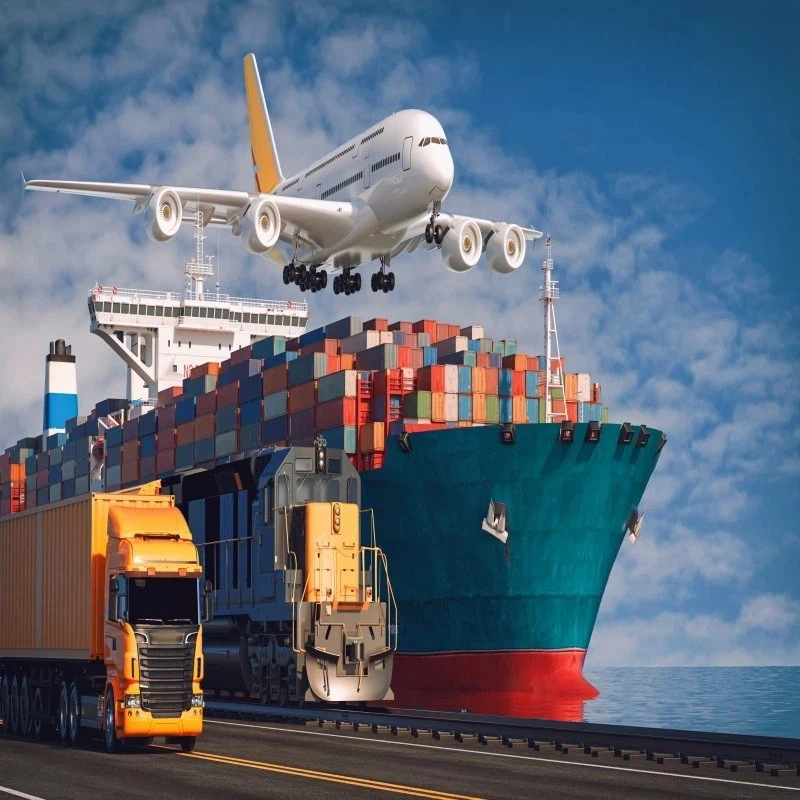
If you've ever been baffled by the logistics of getting a product from a factory overseas to your warehouse, you've encountered the exact problem a freight forwarder solves. They are the crucial, yet often unseen, architects who make global commerce possible. Let's demystify what they do and why they are an indispensable partner for any business navigating international waters.
Beyond a Middleman: The Core Role of a Freight Forwarder
At its simplest, a freight forwarder is a third-party expert who organizes and coordinates the shipment of goods on behalf of importers and exporters. Think of them as a master conductor for your supply chain orchestra. They don't own the ships, planes, or trucks, but they possess the expertise and network to contract with the carriers that do.
Their primary job is to take the immense complexity of international shipping off your plate. This involves designing the most efficient route (which may combine sea, air, and land transport), handling reams of critical documentation, and ensuring compliance with the constantly shifting landscape of customs regulations.
The Architect's Toolkit: Key Services Provided
A forwarder's value is delivered through a comprehensive suite of services that cover the entire journey of your cargo:
- Transportation & Consolidation: They select the optimal mode (air for speed, sea for cost) and can consolidate smaller shipments from multiple clients into one full container, securing significant cost savings for everyone involved.
- Documentation & Customs Clearance: This is where expertise is non-negotiable. Forwarders prepare and process vital documents like the commercial invoice, bill of lading, and export declarations. Their deep knowledge of import/export regulations helps avoid costly delays, penalties, or cargo seizures at borders.
- Insurance & Risk Management: They arrange cargo insurance to protect your goods financially and employ tracking technologies for real-time visibility, allowing for proactive risk management.
- Warehousing & Final Mile Delivery: Many offer storage solutions and can coordinate the final leg of the journey, delivering goods directly to your door, creating a seamless, end-to-end service.
Why Partnering with a Professional is a Strategic Move
Choosing to work with a forwarder isn't just about outsourcing a task; it's a strategic decision that impacts your bottom line and operational agility.
- Unlock Cost Efficiency: With established relationships and high shipment volumes, forwarders negotiate superior carrier rates that are often unavailable to individual shippers. Their skill in route optimization and consolidation directly translates to lower overall shipping costs.
- Navigate Compliance with Confidence: The maze of international trade laws is their specialty. A professional forwarder stays current on changes, ensuring your shipments comply, which is perhaps the most effective form of risk mitigation in global trade.
- Regain Time and Focus: Managing logistics in-house consumes precious time and resources. By delegating this complexity, your team can refocus on core business activities like product development, sales, and customer service.
- Access a Global Network: They provide a single point of contact to a worldwide web of trusted carriers, port agents, and customs brokers, simplifying your operations and providing local expertise in every market.
What This Looks Like in Practice: The XMAE Logistics Approach
So, what separates a competent forwarder from a truly valuable logistics partner? It comes down to proactive communication, tailored solutions, and technological clarity.
For example, a forwarder like XMAE Logistics embodies this partnership model. It's not just about moving a box from Point A to B. It starts with understanding your unique business-whether you're shipping perishable goods, high-value electronics, or oversized machinery-and crafting a solution that balances speed, cost, and reliability.
The real test of a forwarder is how they handle the unexpected: a sudden port closure, a missing document, or a customs query. A strong partner doesn't just inform you of a problem; they present a solution, leveraging their network to find alternative routes or resolve issues swiftly.
Furthermore, in today's world, visibility is as important as the physical movement. Providing clients with access to a clear, intuitive platform for real-time tracking, documentation, and analytics is a hallmark of a modern forwarder. This transparency builds trust and allows you to plan more effectively.
Key Differences: Going It Alone vs. Partnering with a Pro
|
Aspect |
Managing Shipments Yourself |
Partnering with a Professional Freight Forwarder |
|
Expertise & Compliance |
You bear the full risk of navigating complex, changing international trade laws. |
You gain a dedicated expert who ensures compliance, minimizing the risk of delays and fines. |
|
Cost & Efficiency |
Limited negotiating power with carriers; potential for inefficient routing and hidden fees. |
Access to negotiated rates, optimized routes, and consolidated shipping for significant cost savings. |
|
Time & Resources |
Requires significant internal time and manpower to coordinate all logistics and paperwork. |
Frees your team to focus on strategic, revenue-generating core business activities. |
|
Risk Management |
Reactive problem-solving with limited resources when disruptions occur. |
Proactive risk management with cargo insurance and real-time tracking for greater control and peace of mind. |
|
Network & Scalability |
Building a reliable global carrier and agent network from scratch is slow and difficult. |
Instant access to an established, vetted global network, making market expansion smoother and more scalable. |
Frequently Asked Questions
Q: I'm a small business. Are freight forwarders only for large corporations?
A: Not at all. In fact, forwarders can be especially valuable for SMEs. By pooling your shipment with others (consolidation), you gain access to cost-effective rates and expertise that would be otherwise out of reach, allowing you to compete on a global scale.
Q: How do freight forwarders charge for their services?
A: They typically charge a fee for their coordination and expertise, which may be a flat fee, a percentage of the freight cost, or built into the all-inclusive rate they quote you. Reputable forwarders provide transparent, detailed quotes that break down transportation, documentation, and customs clearance fees.
Q: What information do I need to provide to get an accurate shipping quote?
A: Be prepared with key details: origin and destination ports/airports, cargo dimensions/weight, a description of the goods (including HS codes if known), preferred transport mode (air/ocean), and any special requirements (e.g., temperature control).
In conclusion, a freight forwarder is far more than a simple booking agent. They are strategic partners, risk managers, and efficiency experts rolled into one. In the complex symphony of global trade, they ensure your cargo doesn't just move-it moves intelligently, reliably, and cost-effectively to its final destination.