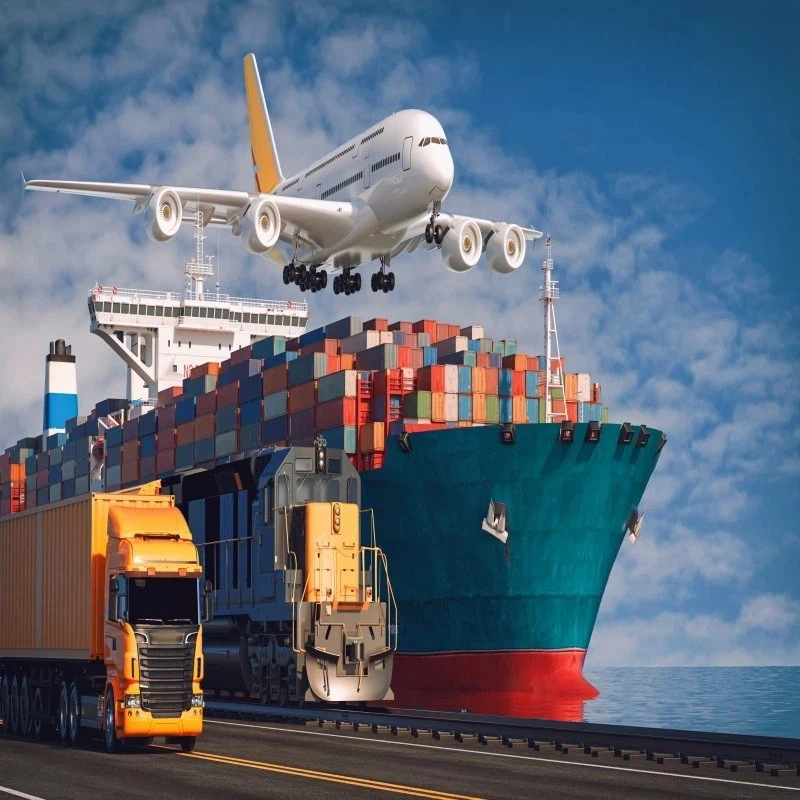
Every importer eventually hits the same wall: you've sourced your product, negotiated the price, booked the shipment-and then someone asks, "By the way, is this actually allowed in a container?"
It's a question that doesn't get asked nearly often enough. Because the list of things that are not allowed in a shipping container is longer than most people realize, and the consequences of getting it wrong range from a rejected shipment to a full-blown safety incident.
Here's what you need to know before your cargo gets anywhere near a vessel or a railcar.
The Big Picture: Why Certain Items Are Banned
Containers are designed to move general cargo safely across oceans and continents. But "general cargo" has boundaries. When you put something inside a sealed steel box that's going to spend weeks at sea or cross a continent by rail, you're creating a shared environment. If one shipment leaks, combusts, or corrodes, it doesn't just ruin your cargo-it threatens the vessel, the crew, the rail network, and every other shipment in the same box.
That's why carriers, ports, and rail operators maintain strict prohibited cargo lists. And the rules aren't just about safety-they're also about contamination. A container that once held cement or fertilizer can leave residue that damages the next shipment of food-grade products. A box that carried oily engine parts can taint an entire load of textiles.
Category 1: The Obvious Ones-Dangerous Goods
If it's explosive, flammable, toxic, or radioactive, it's almost certainly banned from standard dry containers. Carriers like Wan Hai explicitly prohibit all Class 1 explosives, toxic gases, and radioactive materials from dry containers. The International Maritime Dangerous Goods (IMDG) Code goes further, stating that any substance liable to explode or dangerously react during transport is forbidden unless specifically exempted.
This isn't limited to military-grade munitions. Fireworks, ammunition, flares, and even certain types of propellants fall into this category. If your product has any explosive component-even a small one-it needs special handling or it doesn't ship.
Category 2: The Surprising Ones-Rail-Specific Restrictions
Here's where things get interesting, especially if your cargo touches rail at any point in its journey. Rail operators impose their own restrictions on top of maritime rules, and some of them catch shippers off guard.
According to Chinese railway container regulations, the following cannot be shipped in general-purpose rail containers: cargo that easily contaminates or corrodes the container body (cement, carbon black, fertilizer, salt, grease, raw hides, bones), cargo that damages the container (pig iron, scrap steel, uncoated castings), perishable goods, and dangerous goods.
That list is worth reading twice. "Raw hides" and "bones" might seem oddly specific, but they're there for a reason: these materials can leak, smell, and contaminate everything else in the container. And in rail transport, where containers are often stacked and moved multiple times, the risk of damage and leakage multiplies.
There's also a structural rule that rail operators take seriously: a container with visible cracking around corner castings or in welds is not accepted for rail transport, loaded or empty. Even a hairline crack that seems trivial can compromise the container's integrity under the stress of rail movement.
Category 3: The "Gray Area" Items That Get Rejected
Some items aren't technically "prohibited" in the same way explosives are-but they're restricted, and shipping them without proper documentation or packaging will get your container rejected.
Batteries are a prime example. Used, damaged, or defective lithium batteries are prohibited outright. New batteries may be accepted under specific conditions, but they require proper packing and documentation. Some carriers won't accept any cargo containing built-in batteries without prior approval.
- Food and beverages fall into a non-standard commodity category that requires prior approval from the carrier. The same goes for chemicals, cosmetics, machinery containing oil or gas, and any cargo with steel coils.
- Waste shipments are governed by the Basel Convention and require written consent from the competent authorities of the exporting, importing, and transiting states. Without that paperwork, they don't move.
- Livestock, illegal drugs, counterfeit goods, and products from sanctioned ports are all prohibited across the board.
The Rail Connection: Why Packing Matters More Than You Think
If you're shipping via Shipping Container Rail Transport-and for inland destinations in North America, Europe, or Asia, you almost certainly are-the stakes are higher than you might realize.
Rail moves containers at speed over long distances. The forces at play-vibration, lateral sway, sudden braking-are different from what a container experiences at sea. A poorly packed container can shift its center of gravity during rail transit, creating wheel load imbalances that increase derailment risk. The European Union Agency for Railways has specifically flagged this as a concern, recommending that terminal operators screen containers for load offsets before they enter rail traffic.
The UK's Rail Accident Investigation Branch has also highlighted that shippers and forwarders are often not fully aware of published guidelines for safe container packing-guidelines designed to ensure cargo remains evenly loaded and secure throughout the journey.
In other words: the biggest risk in Shipping Container Rail Transport isn't the train. It's the box.
How XMAE Logistics Approaches This Differently
This is where the choice of logistics partner stops being about rates and starts being about risk management.
At XMAE Logistics, we don't treat compliance as an afterthought. We treat it as the foundation of every shipment. Based in Xiamen-one of China's busiest gateway ports-we handle the full door-to-door journey for our clients, including the critical handoff to rail for inland destinations worldwide. We hold IATA, FIATA, FMC, and NVOCC approvals, and our network spans over 100 overseas agents.
But what really sets us apart in Shipping Container Rail Transport is our focus on the part that causes the most problems: the container itself.
- We screen cargo before it ever reaches the container. Our team reviews your product specifications against carrier restrictions and destination-country regulations before we book anything. If something can't ship in a standard container, we tell you upfront-not after your cargo is sitting at the port.
- We prioritize proper loading and securing. A container that's packed correctly is a container that's safe on the rails. We work with suppliers to ensure cargo is evenly distributed, properly braced, and secured according to CTU Code guidelines. This isn't a checkbox exercise-it's the difference between a smooth rail journey and a derailment risk.
- We maintain visibility across the entire handoff. The transition from ocean to rail is where shipments most often go sideways-not because of accidents, but because of poor communication. We close that gap with real-time tracking and a single point of accountability from origin to destination.
- We don't rely on a single carrier or route. Our deep network and partnerships with multiple carriers allow us to dynamically chart the most efficient routing for your cargo, even when restrictions or congestion force a change in plans.
The Bottom Line
The list of what's not allowed in a shipping container is longer and more nuanced than most importers expect. Explosives and radioactive materials are obvious. But contaminated cargo, damaged containers, unapproved batteries, and improperly secured loads can derail your shipment just as surely-and often with less warning.
If you're moving goods internationally, especially through Shipping Container Rail Transport, the smart move is to work with a forwarder who understands the restrictions before your cargo is already in motion. At XMAE Logistics, we've built our business around getting those details right-from the factory floor in Xiamen to the rail yard in Chicago or Toronto.
Ready to ship with confidence? Get in touch with XMAE Logistics today and let's make sure your cargo is compliant, secure, and on its way.