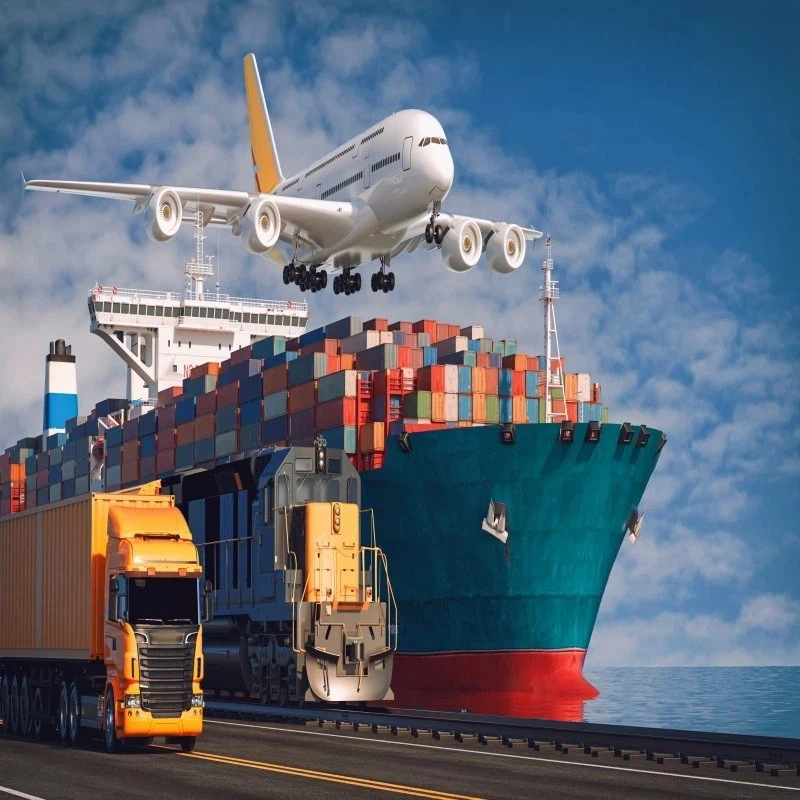
If you ship out of Vietnam, you know the routine all too well. Hanoi and Ho Chi Minh City have become manufacturing powerhouses, but air freight capacity out of both cities has been getting tighter and tighter. Rates have climbed. Space is harder to lock in. And when peak season hits, direct flights aren't always enough.
That's why a quiet pilot project that wrapped up in September is worth paying attention to.
What Hacis just tested
Hong Kong Air Cargo Industry Services Limited - Hacis, the logistics arm of Hactl - has extended its SuperLink China Direct road-feeder service to Vietnam for the first time. The pilot shipment was coffee beans, trucked from Hanoi through the Wuzhou Comprehensive Bonded Zone in China's Guangxi region, then transferred to a customs-bonded truck equipped with a Single E-lock for the rest of the journey into Hong Kong.
The journey from the Vietnam-China border to HKIA took about 30.5 hours. The Single E-lock scheme lets customs authorities in mainland China and Hong Kong monitor cargo with the same electronic lock and reference each other's inspection results - cutting down on duplicate checks at the boundary.
Ringo Chan, executive director of Hacis, called it the first expansion of the SuperLink model beyond mainland China. "By linking Vietnam with Hong Kong's extensive global air cargo network, the new service provides customers with more routing options and greater flexibility".
Why this matters beyond the headline
Here's the context that makes this more than just another pilot. Vietnam's airport system handled 920,900 tonnes of cargo in the first half of 2026 alone. Noi Bai Airport in Hanoi accounts for nearly 60% of that total. And Vietnam's AI-related air cargo exports jumped 110% year-on-year in the first four months of 2026, according to consultancy Aevean.
At the same time, airfreight capacity out of Hanoi and Ho Chi Minh City has tightened significantly. That's the squeeze this new road-air corridor is designed to address. Instead of relying solely on direct flights from Vietnam, cargo can move by road through mainland China and connect to HKIA's global network - one of the busiest cargo airports in the world.
The service is being developed with Vietnamese logistics company U&I Logistics and is intended to carry freight in both directions: exports from Vietnam to HKIA, and imports from HKIA through mainland China into Vietnam. Target traffic includes electronics, industrial products, garments, agricultural commodities, and high-value, time-sensitive shipments.
What this means for your shipments
A new corridor is a new option - but options only matter if you know how to use them. Shippers moving goods out of Vietnam now have a genuine alternative to direct air freight, one that taps into HKIA's flight network without depending entirely on Vietnam's own outbound capacity.
But this kind of multimodal routing brings its own complexity. Customs procedures at the Vietnam-China border still apply as standard before the Single E-lock kicks in at Wuzhou. Transit times need to be planned around border clearances. And the service is still in the "based on market demand" phase, with schedules and frequency yet to be confirmed.
That's exactly the kind of situation where having the right logistics partner makes a difference.
How we help you make sense of new routes
At Xiamen AE Global, we've been navigating cross-border trade corridors across Asia since 2018. We're a government-licensed company with IATA, FIATA, FMC, and NVOCC credentials - which means when a new route like the Vietnam-HKIA corridor opens up, we're not just reading about it. We're already talking to our partners on the ground about what it means for our clients.
We work with over 100 overseas agents worldwide. That network gives us real-time intelligence on how new corridors actually perform - not just how they're marketed. When you're weighing whether to route cargo through Vietnam's direct air capacity or the new road-air option via HKIA, we can help you evaluate the trade-offs in transit time, cost, and reliability.
1. Technology that keeps you informed
We've invested heavily in visibility tools that give our clients actual insight into their shipments - not just a tracking number. When you're moving cargo across multiple borders and modes, knowing where your freight actually is at any given moment isn't a nice-to-have. It's essential.
2. Local knowledge, global reach
Based in Xiamen - one of Asia's busiest port cities - we combine global reach with the kind of local knowledge that only comes from moving all kinds of goods for over a decade. We've moved over 12,000 TEUs in a single year with a 98.6% on-time delivery rate for our SME clients.
The bottom line
Vietnam's manufacturing boom isn't slowing down. Neither is the pressure on its air freight capacity. The new Vietnam-HKIA road-air corridor is a smart answer to that squeeze - a genuine alternative for shippers who need flexibility and access to global routes.
At Xiamen AE Global, we don't just move boxes. We help our clients take advantage of new opportunities - whether that's testing a new multimodal corridor, securing space when direct capacity tightens, or simply making sure your cargo gets where it needs to go, on time and on budget.
Because when new routes open up, you don't need a spectator. You need a partner who's already charting the way.
Curious about how the Vietnam-HKIA corridor could fit into your supply chain? Contact Xiamen AE Global today - and let's find the route that works best for your cargo.