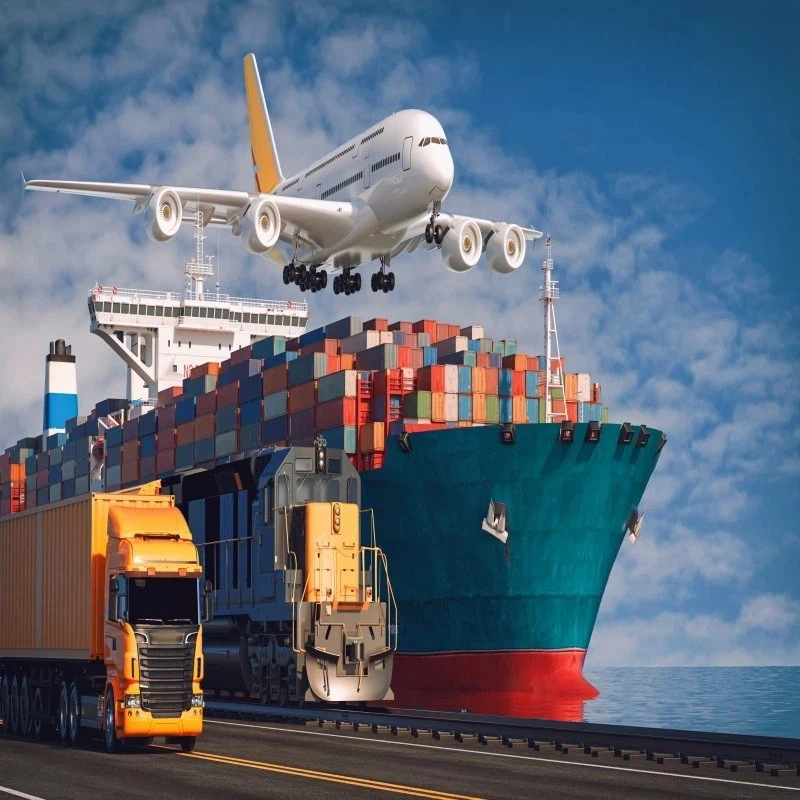
Tariffs aren't just increasing costs-they're fundamentally changing how companies move goods around the world. And air freight is the big winner.
Let's face it: trade has gotten complicated. Over the past year, U.S. tariff rates surged to around 17 percent, the highest levels since the 1930s, forcing businesses to rethink practically every decision they make about moving products across borders. When tariffs hit, ocean shipping usually takes the hardest hit-and that's exactly what happened.
A new report by Infios, which analyzed more than one million U.S. customs entries, found that air freight jumped by roughly 12 percentage points as companies scrambled to adjust. Meanwhile, ocean shipping dropped by about 10 to 12 percentage points and has yet to recover.
Why? Simple: When every day counts-because the next tariff deadline is just around the corner-you can't afford to wait six weeks for a container ship.
The Air Cargo "Shock Absorber"
Truck transportation also saw a bump of about 8 percentage points, largely driven by nearshoring and shorter supply chains. Bonded warehouse use climbed from around 10 percent to 16–18 percent. And perhaps most telling? Shipment values rose roughly 78 percent, while the number of entries fell about 7 percent-suggesting businesses are shipping fewer but larger and more valuable loads.
What does that mean on the ground? Companies are consolidating, optimizing, and looking for faster, more reliable ways to move high-value goods. And that's exactly where air freight shines.
The International Air Transport Association (IATA) called air cargo "the hero of global trade" in this environment. According to IATA Director General Willie Walsh, air freight "enabled front-loading to deliver products ahead of tariff deadlines, and it flexibly accommodated demand surges as tariffed goods normally destined for the U.S. found new markets".
In other words: when trade rules change overnight, air freight moves faster than any other mode. That's why global air cargo demand rose 4.1 percent year-over-year in 2025, with cargo tonne-kilometers reaching an all-time high of 25.4 billion in October alone, driven by surges on routes from the Far East to Europe.
What This Means for Your Supply Chain
If you're an importer or exporter watching tariffs shift week to week, here's the bottom line: air freight isn't just for emergencies anymore. It's becoming a strategic tool for managing risk.
IATA projects global air cargo volumes to reach approximately 71.6 million tonnes in 2026, with cargo revenues rising to $158 billion. The Asia-Europe trade lane grew 13.1 percent, recording its eighth consecutive month of double-digit growth.
But here's the catch: capacity is tightening. Global aircraft shortages have pushed the backlog to over 17,000 planes-roughly 60 percent of the active fleet. Airlines are pushing utilization to historic highs, but that means less room for error.
Where XMAE Logistics Comes In
At XMAE Logistics, we've been watching these shifts closely. When tariffs reshape trade lanes overnight, you need a partner who can adapt just as fast-not one who's still figuring out which airline to call.
Here's what we bring to the table:
- Global network, local expertise. With over 100 overseas agents and a government-licensed, IATA-approved operation, we cover the ground that matters. Whether your goods are moving from China to Europe, Asia to North America, or anywhere in between, we've got the connections to keep your cargo moving. As one of our clients put it: we don't just book space on planes-we engineer fast, reliable global air freight solutions because we understand what's really at stake: your reputation, your operations, and your customers.
- Real-time tracking you can actually use. When every hour counts, waiting for an email update isn't good enough. Our clients get live tracking that integrates with their own systems, plus automated customs document preparation that cuts through bureaucratic red tape before it becomes a problem.
- The relationships that matter. Long-standing partnerships with major airlines and charter operators mean we can access capacity and priority options when everyone else is scrambling. Tight peak season? No problem. We've been navigating air freight complexity for over 20 years.
- Transparent pricing, no games. All-inclusive rates with no hidden "fuel adjustment" mysteries or surprise surcharges. What we quote is what you pay-something our clients consistently tell us they appreciate, especially in volatile markets.
The Bottom Line
Tariffs aren't going away. Trade lanes will keep shifting. But one thing is clear: air freight has become the go-to solution for businesses that need to move fast and stay agile.
If you're ready to rethink your supply chain strategy-or just need a reliable partner to handle your next air freight shipment-we're here to help.
[Get a real-time air freight quote]
[Learn more about our air freight services]