


The global shipping industry is no stranger to surprises. But the wave of war-risk surcharges rolling out in response to the escalating Middle East crisis has freight forwarders around the world sounding the alarm. And they're not just worried about the current numbers on their invoices. They're worried about what happens next.
"The concern is not only the current level of charges, but the precedent it sets," multiple forwarders told The Loadstar in early April. "Once normalised, these pricing mechanisms risk becoming embedded beyond the period of actual disruption."
In other words, the surcharges we're seeing today - ranging from $1,500 to as much as $4,000 per container on routes through the Persian Gulf and Arabian Sea - could stick around long after the immediate crisis fades. And that has serious implications for anyone who moves cargo across borders.
## What's Actually Happening Right Now
Following the escalation of the USIsrael war against Iran, major carriers including CMA CGM, Maersk, and Hapag-Lloyd have introduced so-called "war risk surcharges" (WRS) and emergency conflict surcharges across a wide range of trade lanes. Hapag-Lloyd, for instance, implemented a WRS of $1,500 per TEU for standard containers and $3,500 per reefer box for cargo moving to and from the Upper Gulf, Middle East Gulf, and Arabian Gulf. On top of that, base freight rates have already surged by 30 to 50 percent due to capacity shortages.
The situation has become so severe that the Federation of Freight Forwarders' Associations in India (FFFAI) reports that roughly 70 percent of Indian exports have been disrupted. And FIATA, the International Federation of Freight Forwarders Associations, has issued urgent legal and insurance guidance, warning that standard cargo policies may not even cover war risks - leaving cargo interests fully exposed unless separate cover is arranged.
## Why Forwarders Are Saying This Crosses a Line
Here's the core of the complaint forwarders aren't arguing that carriers shouldn't cover their additional risks. The problem is that these surcharges don't actually provide any extra protection, priority, or service benefit for the shipments they're applied to. In practice, they function more as a pricing mechanism than a genuine risk-mitigation tool.
Unlike fuel surcharges - which at least have some kind of reference framework - war-risk surcharges seem to lack rhyme or reason. As one industry observer put it, carriers may simply be "testing the water to see what they can get away with."
And if they get away with it this time "At any opportunity to claim market instability, carriers would hit customers with some sort of pricing incident that further undermines the reliability of global supply chains," forwarders warned.
That's the dangerous precedent everyone's talking about.
## So What Can Shippers and Importers Do
When the system shakes, the smart move is to work with someone who doesn't just follow the chaos - but helps you navigate through it.
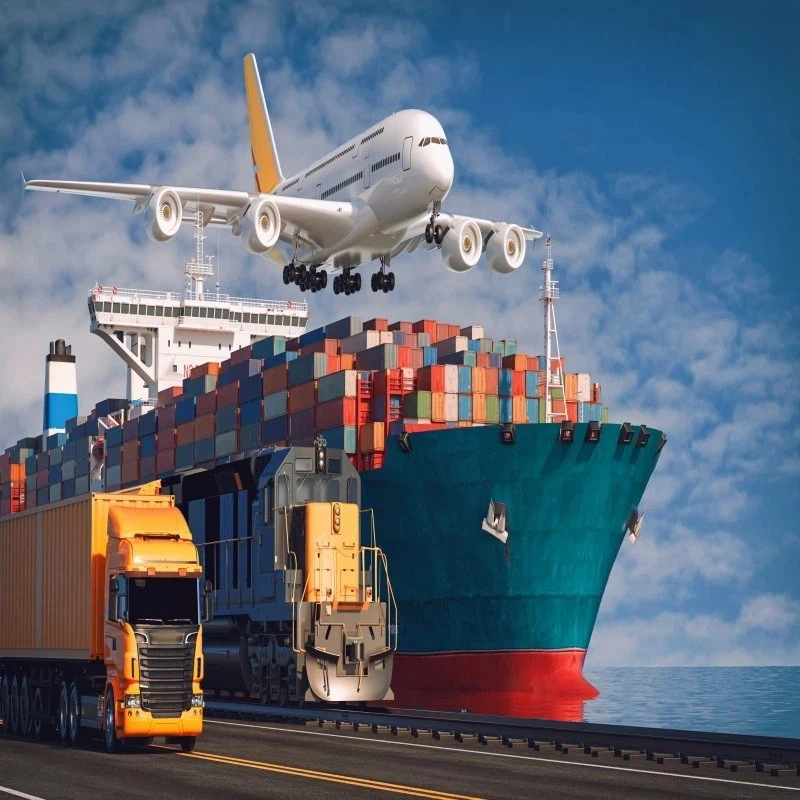
At XMAE Logistics, we've been helping businesses move freight through turbulent markets since 2018. Based in China with a network spanning over 100 overseas agents, we offer a full suite of services that cover exactly the kinds of challenges this crisis has thrown up airfreight when ocean routes get unpredictable, ocean freight when capacity opens up, warehousing for buffer stock, and customs clearance to keep things moving at the borders.
We're also government-licensed and approved by IATA, FIATA, FMC, and NVOCC - meaning we don't just talk about compliance, we live it. Our team has more than a decade of hands-on experience in the freight forwarding industry, and we operate with a commitment to transparency that's more than just a slogan on a website.
When carriers start piling on surcharges with little justification, having a forwarder who can explain what you're actually paying for - and help you explore alternatives - makes all the difference. Whether that means rerouting via less-affected ports, shifting to air freight for time-sensitive goods, or simply consolidating shipments smarter to offset the added costs, we're here to make sure your supply chain doesn't get held hostage by market chaos.
We specialize in major Chinese ports including Xiamen, Fuzhou, Shanghai, Ningbo, Shenzhen, and Guangzhou, and we handle everything from FOB to CIF transactions - including switch MBLHBL and assistance with Certificates of Origin, Form A, document legalization, and more.
Door-to-door delivery, warehouse consolidation, and DDUDDP services are all part of what we do. And we do it with real people on the other end of the line, not automated responses.
## The Bottom Line
The war-risk surcharge debate isn't going away anytime soon. Industry bodies are already calling for international regulation, and forwarders are pushing back hard. But while the industry fights over the rules, your shipments still need to move.
That's where XMAE Logistics comes in. We keep an eye on the headlines so you don't have to - and we make sure your cargo keeps flowing, no matter what surcharges the carriers dream up next.
Ready to talk about a smarter way to move your freight [Get in touch with us today](httpswww.xmaelogistics.comcontact) for a transparent quote and a logistics partner who actually has your back.
---
## Frequently Asked Questions
Q What exactly is a war-risk surcharge (WRS)
A It's an additional fee that shipping lines add to freight costs when vessels pass through areas deemed high-risk due to armed conflict. Unlike standard freight rates, these surcharges are often introduced with little notice and minimal justification - which is exactly why forwarders are raising concerns.
Q How much are war-risk surcharges right now
A Depending on the carrier and route, current war-risk surcharges range from roughly $1,500 to $4,000 per container, on top of base freight rates that have already increased by 30 to 50 percent.
Q Does paying a war-risk surcharge mean my cargo is protected
A Not necessarily. Forwarders point out that these surcharges typically provide no additional protection, priority, or service benefit - they function more as a pricing tool than actual insurance. You may still need separate war-risk insurance coverage.
Q How can XMAE Logistics help me manage these surcharges
A We help by exploring alternative routes, comparing carrier options, consolidating shipments to reduce per-unit costs, and advising on whether air freight makes more sense than ocean freight for your specific cargo. And we always give you a clear, upfront explanation of what you're paying for.
Q Is XMAE Logistics licensed and accredited
A Absolutely. We are a government-licensed company with IATA, FIATA, FMC, and NVOCC approvals - so you can trust that we meet the highest industry standards for compliance and professionalism.