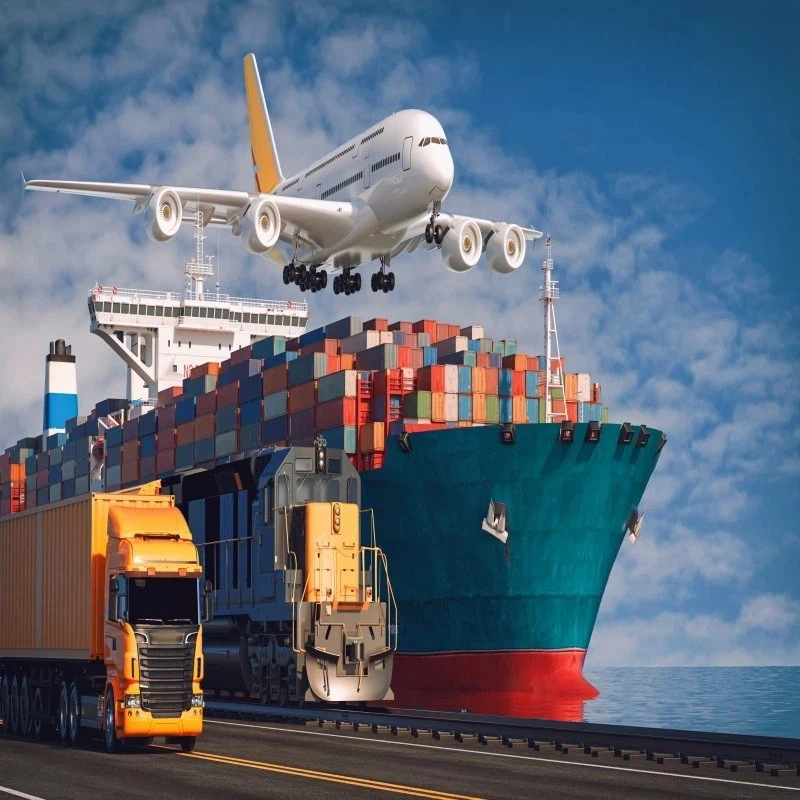
The shipping world is serving up a mixed bag right now. On one hand, ocean freight volumes are surging-Maersk just reported a 9.3% jump in loaded ocean volumes year over year, hitting 3.2 million FFE in the first quarter of 2026. That's a lot of containers moving across the seas. On the other hand, freight rates have taken a serious hit, dropping 14% on average. So more goods are shipping, but carriers are making less money per box. The result? Maersk's ocean business swung to an EBIT loss of 192million,asharpreversalfromthe192million,asharpreversalfromthe743 million profit posted a year earlier.
Meanwhile, air cargo is quietly having a moment. According to IATA, global air cargo demand kicked off 2026 with 5.6% year-over-year growth in January, and international operations grew even faster at 7.2%. In the Asia-Pacific region-where Xiamen sits right in the heart of the action-demand surged 7.8%. That's not a small blip; it's a clear signal that air freight is becoming an increasingly essential piece of the global supply chain puzzle, especially for time-sensitive and high-value cargo.
So what's driving all this? And more importantly, what does it mean for businesses trying to move goods in and out of China?
Why Ocean Freight Rates Are Falling Despite Record Volumes
The ocean freight market is facing a classic case of too many ships chasing not enough cargo-or rather, too many ships chasing cargo at rates that keep falling. Industry overcapacity is the main culprit. The global container fleet has expanded from 16.3 million TEU in February 2019 to 21.4 million TEU in February 2026-a staggering 31.8% increase. Add to that the gradual resumption of Red Sea routes, which frees up even more vessel capacity, and you have a recipe for downward pressure on rates.
Spot rates on major east-west trades have now fallen for three consecutive weeks, and some analysts are calling 2026 a "buyer's market" for container shipping. Tariff uncertainty isn't helping either. U.S. container imports are projected to contract by 1.8% in the first half of 2026, as shippers work through inventories built up during the trade war escalation. That's softening demand on one of the world's busiest trade lanes, putting even more pressure on rates.
But here's the thing: lower rates don't necessarily mean lower total shipping costs, especially when bunker fuel prices are volatile and rerouting due to geopolitical disruptions adds time and expense. Shippers who chase the lowest spot rate on a deal-by-deal basis might end up paying more in the long run, through rolled cargo, equipment shortages, or unpredictable transit times. The smart move? Work with a forwarder who understands the market and can lock in competitive rates without sacrificing service reliability.
Air Cargo's Comeback
While ocean freight deals with overcapacity, air cargo is enjoying a resurgence. The numbers don't lie: 5.6% growth in January, outpacing capacity growth of just 3.6%. That means demand is actually ahead of available space-a dynamic that puts air freight in a much healthier position than ocean shipping right now.
What's driving the demand? Part of it is the usual suspects: e-commerce, electronics, and high-value components that need to move fast. But there's also a structural shift happening. Companies are increasingly viewing air cargo not as a premium emergency option, but as a core part of their supply chain strategy. In a world where trade policies change overnight and geopolitical flare-ups can close shipping lanes without warning, speed and reliability become non-negotiable.
For businesses shipping out of China, especially from manufacturing hubs in Fujian and neighboring provinces, air freight offers a way to bypass the volatility of ocean shipping-no worrying about Red Sea diversions, Strait of Hormuz closures, or container availability crunches. It costs more per unit, sure, but sometimes the cost of delay is even higher.
Where Xiamen AE Global Fits Into the Picture
This is where having the right logistics partner makes all the difference. Xiamen AE Global SCM Co., Ltd. has been in the freight forwarding game since 2018, and in that time we've built something that shippers today need more than ever: flexibility [0†L3-L5].
We're not just an ocean forwarder or just an air forwarder. We handle both-plus rail, customs clearance, warehousing, and even break bulk shipments [0†L6-L8]. That means when ocean rates are sinking and the market is chaotic, we can help you pivot to air without missing a beat. And when the air market gets tight during peak season (as it inevitably does), our established relationships with carriers help keep your cargo moving.
Our network spans over 100 overseas agents, so whether your goods are headed to Los Angeles, Rotterdam, or São Paulo, we've got you covered [0†L5-L6]. We're also fully licensed-government-approved, IATA, FIATA, FMC, and NVOCC certified-so you're not dealing with a fly-by-night operator [0†L3-L4]. That kind of credentials matter, especially when you're shipping high-value cargo that needs to clear customs smoothly and arrive on time.
What we hear most from clients is that they appreciate the peace of mind. In a market where everything feels uncertain-rates one week, geopolitics the next-working with a forwarder who offers competitive rates and real service reliability is a rare combination. We deliver both.
Shippers: Two Approaches
|
Approach |
Pros |
Cons |
|
Spot market chasing |
Lower headline rates if timing is right |
Unpredictable availability, risk of rolled cargo, volatile costs |
|
Strategic partnership with a forwarder |
Stable rates, reliable capacity, multimodal flexibility |
Requires upfront relationship building |
At Xiamen AE Global, we're big believers in the second option. Markets change fast. Having a partner who can switch your cargo from ocean to air, find alternate routings when disruptions hit, and give you straight answers about what's really happening-that's worth more than saving a few dollars on a spot rate that might double next week.
If you're shipping from China and wondering how to navigate this strange market-where ocean volumes are up but rates are down, and air cargo is growing faster than anyone expected-let's talk. We're based right here in Xiamen, we know the ports, we know the carriers, and we're ready to help you find the right mix of ocean, air, and rail for your supply chain.