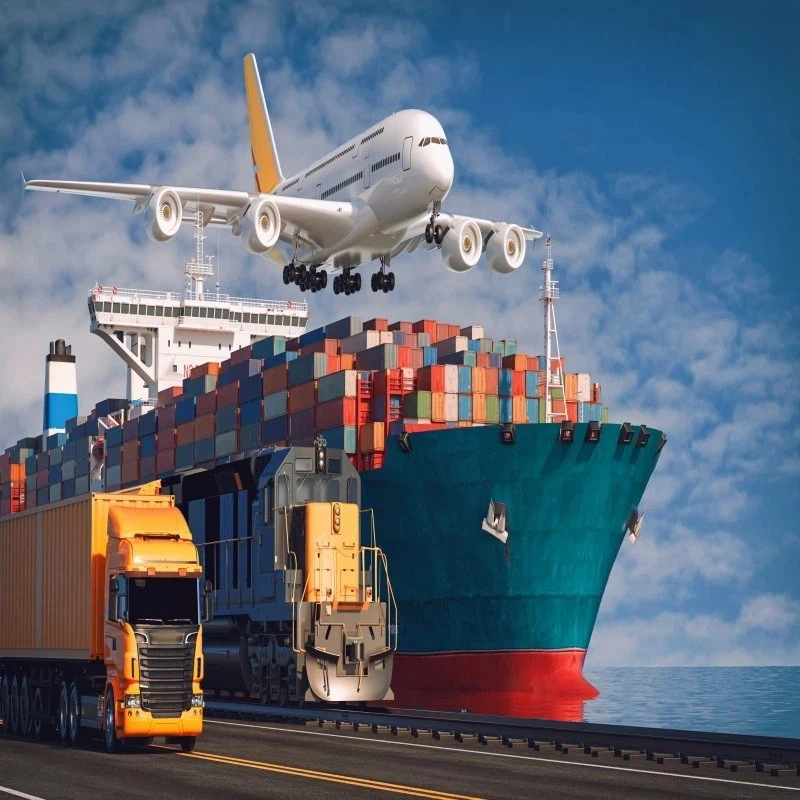
The most significant shift in Asia-Europe container shipping this year isn't happening on the water-it's happening on the route map.
On September 14, Maersk and Hapag-Lloyd announced that four more Gemini Cooperation services would return to the Suez Canal, abandoning the long detour around the Cape of Good Hope. The AE5 (Asia-North Europe), AE11 and AE12 (Asia-Mediterranean), and ME2 (India-Europe) services will now transit via Suez, joining AE15 and AE19, which already made the switch earlier this summer.
The first vessels to make the move tell the story. The 15,150 TEU Antonia Maersk departs Tanjung Pelepas on September 19 on the AE11. The 18,000 TEU Marchen Maersk follows on September 21 on the AE5. And the 8,650 TEU Cornelia Maersk sails from Colombo on September 24 on the ME2.
For shippers moving cargo between Asia and Europe, this isn't just a routing change. It's a fundamental recalibration of transit times, capacity planning, and supply chain reliability.
Why Suez matters-and why it's coming back
The Suez Canal cuts roughly 4,000 nautical miles off the Asia-Europe route compared with the Cape of Good Hope detour. In practical terms, that's 7 to 14 days saved on a single voyage. For time-sensitive cargo-electronics, apparel, automotive parts-that's the difference between hitting a seasonal window and missing it entirely.
Maersk framed the decision plainly in its customer advisory: "The Suez Canal is a vital maritime corridor between East and West and a key driver of efficient global supply chains. The route through the Suez and the Red Sea is the fastest, most sustainable and most efficient way to serve customers with transport between Asia and Europe".
The move reflects a broader trend. According to Sea-Intelligence Consulting, 18% of headhaul westbound Asia-Europe capacity has now returned to Suez routing-what the analyst calls a "normalisation" of services. On backhaul sailings to Asia, the shift is even more pronounced: 38% of capacity now uses the Suez lane, as carriers rush to reposition assets in export markets hit by severe port congestion from recent typhoons.
But here's the catch shippers need to understand
The return to Suez isn't a clean, permanent switch. It's a conditional, phased realignment-and the risks haven't disappeared.
Houthi forces have expanded their position along Yemen's Red Sea coast and around the Bab el-Mandeb Strait, adding pressure on one of the world's most critical chokepoints. Iran continues to restrict shipping through the Strait of Hormuz on the opposite side of the Arabian Peninsula. As Sea-Intelligence put it, the situation is "akin to the Sword of Damocles hanging over the head of shipping switching to a Suez routing, as the conditions could change from one day to the next".
Maersk and Hapag-Lloyd have been explicit: any changes to Gemini's network will depend on continued stability in the Red Sea and the absence of further escalation. "The safety of the crew, the vessels, and customers' cargo remains the highest priority," the carriers said.
What this means for your supply chain
For shippers, the Suez return creates both opportunity and complexity.
The opportunity is clear: shorter transit times, lower emissions per container, and more predictable schedules on Asia-Europe lanes. The complexity is equally clear: which services are on Suez, which are still on the Cape, and how the mix affects your routing, your costs, and your delivery commitments.
The AE5 service now runs Qingdao–Ningbo–Tanjung Pelepas–Suez–London–Bremerhaven–Hamburg–Rotterdam–Algeciras–Suez–Tanjung Pelepas. The AE11 connects Shanghai, Yantian, and Tanjung Pelepas with Port Tangier, Valencia, Barcelona, La Spezia, Genoa, and Vado Ligure. The AE12 links Ningbo and Shanghai with Algeciras, Koper, and Rijeka. And the ME2 ties Ennore and Colombo to Algeciras, Rotterdam, London, Hamburg, and Port Tangier.
Keeping track of which vessel is on which route-and whether it's actually going to transit Suez or suddenly revert to the Cape-is a full-time job.
This is exactly where having the right partner pays off
At Xiamen AE Global, we've been navigating Asia-Europe trade lanes since 2018. We're a government-licensed forwarder with IATA, FIATA, FMC, and NVOCC credentials. But what really matters in a market like this isn't the certificates on the wall-it's the relationships on the ground and the ability to act on information before it becomes common knowledge.
We work with over 100 overseas agents worldwide. When Gemini announced the AE5, AE11, AE12, and ME2 transitions, our partners in Rotterdam, Algeciras, Tangier, and Colombo were already updating us on berth availability, terminal congestion, and feeder connections. That's not a news alert. That's actionable intelligence.
- Real visibility, not just tracking numbers
We've invested heavily in technology that gives our clients actual transparency into their shipments. When a vessel switches from Cape routing to Suez-or vice versa-you need to know immediately, not when the container shows up two weeks early at a terminal that wasn't expecting it. Our systems flag those changes and present options before they become problems.
- Local knowledge where it counts
Based in Xiamen-one of Asia's busiest port cities-we combine the global reach of an IATA and FIATA-approved forwarder with the local knowledge of a partner who's been shipping all kinds of goods for over a decade. We've moved over 12,000 TEUs in a single year with a 98.6% on-time delivery rate for our SME clients.
The bottom line
The Suez Canal is back-partially, conditionally, and with no guarantees about how long it stays that way. For shippers, that means the Asia-Europe trade is entering a new phase of complexity, where routing decisions can shift with the security situation and transit times are no longer something you can take for granted.
At Xiamen AE Global, we don't just move boxes. We help our clients navigate exactly this kind of uncertainty-whether that's understanding which Gemini service is on Suez this week, securing space on a vessel that actually fits your schedule, or simply making sure your cargo gets where it needs to go without surprises.
Because when the route map keeps changing, you don't need a spectator. You need a partner who's already charting the next move.
Ready to work with a logistics partner who understands the shifting Asia-Europe trade? Contact Xiamen AE Global today-and let's keep your supply chain moving, no matter which route the market takes.