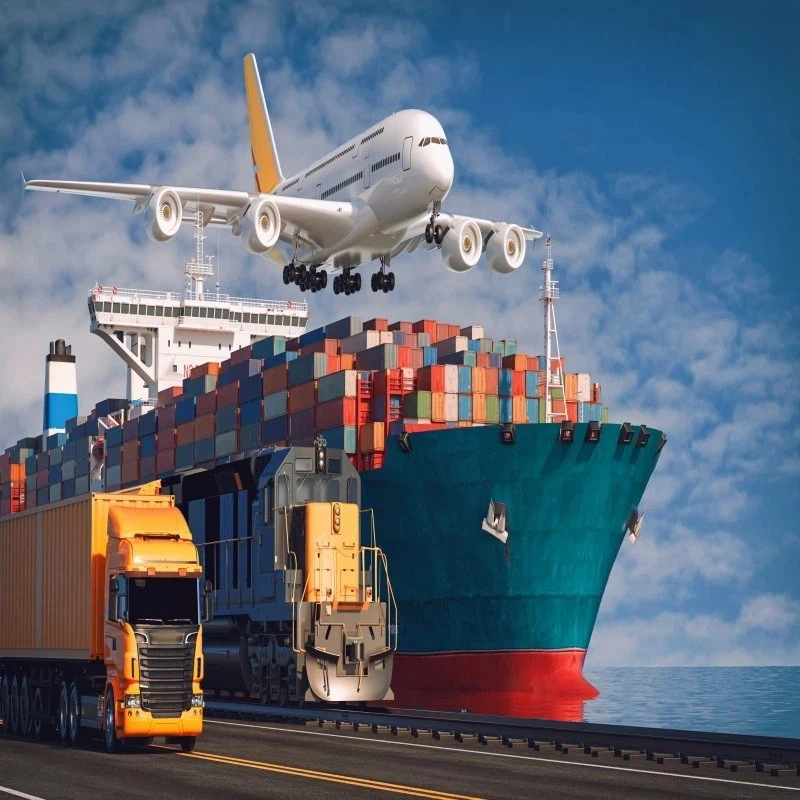
If you're a small or medium-sized freight forwarder, you've probably felt the ground shifting beneath your feet lately. And you're not imagining things.
The freight forwarding industry is changing fast – consolidation is accelerating, major carriers and integrators are muscling in on traditional forwarding turf, and the geopolitical landscape is more volatile than it's been in years. In Shenzhen alone, at least 17 freight forwarders collapsed or went missing in the first half of 2026 – five times the annual average. Margins that used to sit at 20-30% have been squeezed down to 3-5%.
It's a tough time to be in the middle.
The squeeze is real – and it's getting tighter
Let's be honest about what's happening. Large forwarders are using their scale to lock up capacity with carriers. Airlines and ocean lines are increasingly selling directly to shippers, cutting out the middleman. Digital platforms are lowering the barrier to entry, but they're also commoditising the very service that forwarders have built their businesses on.
For SME forwarders, the numbers don't lie. A single shipment disruption can cascade into missed delivery commitments, strained customer relationships, and material financial impact. Unlike the big players, SMEs often lack the balance-sheet resilience to absorb sudden cost increases, delays, or compliance issues. High fuel costs, rising energy prices, and weak margins are putting pressure on the entire industry – but small and medium-sized forwarders are particularly affected.
And then there's the capacity problem. When you're only moving a few dozen containers at a time, carriers aren't going to bend over backwards to give you priority space. During peak season, when舱位 is tight, smaller players often find themselves deprioritised – sometimes with little notice.
But here's the thing – being small doesn't mean being powerless
Industry leaders are starting to push back on the narrative that SMEs are doomed. Dan March, CEO of WCAworld, has argued that smaller forwarders aren't just surviving – they're flourishing. And here's why.
SMEs respond with agility, creativity, and a level of service that's hard to match at scale. While large forwarders may offer scale, what customers actually want – especially when disruptions happen – is reliability, transparency, and responsiveness.
Anthony De Filippis, co-CEO of CargoTrans, put it this way: "While we may not have the biggest contracts, we often solve the most complex problems, and do it fast."
And there's another advantage that doesn't get talked about enough. Large forwarders are often locked into contracts with specific carriers – they only have access to space with the lines they sign big deals with. SMEs, by contrast, "often work with multiple agents at origin" to secure space. That flexibility is a real weapon in a volatile market.
The opportunity that's hiding in plain sight
Here's what the smartest SMEs are doing right now: partnering with master co-loaders and neutral consolidators to get bulk rates and guaranteed space. They're diversifying their carrier relationships so they're not stuck in a bind when one supplier lets them down. And they're embracing digital tools to automate aggressively.
Technology is actually levelling the playing field. AI tools that were once only affordable for the big players are now accessible to smaller forwarders – helping them quote faster, price better, and compete with larger logistics players. One industry observer noted that AI could reshape market dynamics for SME air cargo forwarders, allowing them to aggregate fragmented volumes and optimise routing decisions in real time.
The global freight forwarding market is projected to reach $602 billion in 2026. And SMEs are expected to grow at a compound annual rate of 5.9% – faster than large enterprises – because digital platforms are lowering the barriers to international freight.
This is exactly how we've been operating
At Xiamen AE Global, we've never bought into the idea that you need to be the biggest to be the best. We're a government-licensed company with IATA, FIATA, FMC, and NVOCC credentials – but what really sets us apart isn't the alphabet soup after our name. It's how we work.
We're based in Xiamen – one of Asia's busiest port cities – but our reach is global. With over 100 overseas agents worldwide, we don't just watch the market from a distance. We work directly with our partners on the ground to secure space, find alternatives, and solve problems before they become crises.
When a port gridlocks or a carrier cancels a sailing, we don't scramble. We pick up the phone. We call our partners. We find options. That's the agility that big players just can't replicate.
We've moved over 12,000 TEUs in a single year with a 98.6% on-time delivery rate for our SME clients. That's not luck – it's the result of a simple philosophy: treat every client like they're your only client.
The bottom line
The freight forwarding industry is changing. Consolidation is real. Competition is fierce. Margins are tight. But for SMEs that know how to play to their strengths – agility, flexibility, personalised service, and smart partnerships – the future isn't bleak. It's full of opportunity.
As one industry leader put it: "The market's changing, but there's a strong future for forwarders that bring value beyond just price and capacity."
At Xiamen AE Global, we've been bringing that value since 2018. And we're not planning to stop anytime soon.
Ready to work with a logistics partner that actually cares about your cargo? Contact Xiamen AE Global today – and let's see what a real partnership can do for your supply chain