


If you work in logistics or run a business that relies on importing goods, you've probably felt it: that knot in your stomach every time you open a trade news alert. Over the past few weeks, the buzzword on everyone's lips has been "uncertainty." And honestly? It's starting to take a real toll on the flow of goods into the United States.
According to the latest Global Port Tracker report from the National Retail Federation (NRF) and Hackett Associates, the numbers don't look great for the first half of 2026. Import volumes at major U.S. container ports are projected to fall compared to last year. We're looking at about 12.21 million TEU (twenty-foot equivalent units) in H1 2026, which is a dip of roughly 2.5% from the same period in 2025 .
So, what's going on? Is demand drying up? Not exactly. The real story here is a psychological one: retailers and manufacturers are freezing.
The "Wait and See" Epidemic
The problem isn't a lack of American consumers wanting products; it's the lack of clarity coming out of Washington. We just saw a major legal shake-up where the Supreme Court limited the use of emergency powers for tariffs, only for the administration to immediately pivot and announce new temporary tariffs under Section 122 of the Trade Act .
For a business owner, this creates a nightmare scenario. You don't know if the cost of your goods will jump 10% or 15% next month. You don't know if the customs forms you filled out last week are even valid today.
As Ben Hackett, founder of Hackett Associates, put it, "The situation is very fluid right now." He notes that there's a lot of confusion surrounding trade policy, and companies are simply waiting for clearer signals before they commit to large orders . Many retailers actually pulled orders forward late last year to beat the tariffs, leaving them with fuller warehouses now and less urgency to restock .

The Human Cost of Trade Wars
It's easy to look at "falling imports" as just a statistic, but it has real-world ripple effects. When policies change as frequently as they have been, the "reliability" of the United States as a stable trading partner comes into question . Experts point out that this isn't just about the tax on goods; it's about the erosion of trust.
Businesses need stability to invest. If you're a small manufacturer, you can't hire more staff or expand your facility if you don't know what your raw materials will cost next quarter. As one economist recently noted, the tariffs end up costing the average household-but for businesses, the administrative cost of simply trying to comply with shifting rules is a drain on resources that could have gone toward innovation .

Here is the reality: while the macro environment is out of your control, your logistics strategy doesn't have to be. In times like these, having a partner who can pivot quickly and provide clear, honest guidance isn't just a luxury-it's a necessity.
This is where having a boots-on-the-ground partner like Xiamen AE Global SCM Co., Ltd. makes all the difference. While the big headlines focus on chaos, we focus on solutions.
01
Stability You Can Rely On
While trade policy feels shaky, your freight forwarder shouldn't be. At Xiamen AE Global, we operate with a commitment to professionalism, honesty, and sincerity. We're not just a middleman; we're a government-licensed and IATA, FIATA, and FMC-approved NVOCC. That means we play by the highest regulatory standards, so you don't have to worry about the compliance end of the business.
02
A Network That Absorbs Shock
The uncertainty isn't just about tariffs; it's also about capacity. When one trade lane gets clogged or too expensive, you need options. With a network of over 100 overseas agents, we don't just ship goods; we navigate routes. Whether the current climate favors airfreight to avoid port delays or specific sea freight strategies to manage costs, our experience since 2018 has prepared us to handle these fluctuations.
03
Real Experience, Real Talk
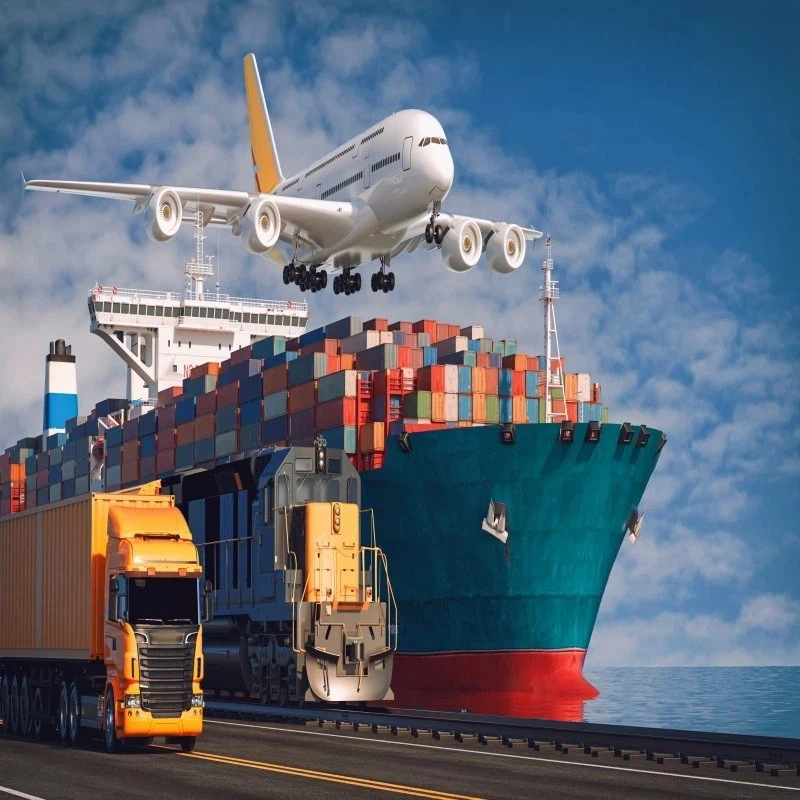
There is no replacement for experience. Our team brings over a decade of logistics experience to the table. We understand that when the news is scary, you need someone to translate that into plain English. We offer very competitive shipping rates, but more importantly, we offer clarity. We help you figure out the best mode-whether it's sea, air, or rail-to keep your supply chain resilient against the "black swan" events that seem to be happening every other month.
The Bottom Line
Yes, U.S. imports are taking a breather. Yes, the tariff situation is a mess. But the global economy isn't stopping. People are still buying, and goods still need to move.
The companies that will survive this period of "tariff uncertainty" aren't necessarily the biggest; they are the most agile. They are the ones with logistics partners who pick up the phone, who understand the difference between IEEPA and Section 122, and who can find a way to get those containers moving even when the rules change overnight.
If you're feeling stuck in the chaos, let's talk. Whether you need help with USA Sea Freight, DDP services, or just some straight answers, Xiamen AE Global is here to help you navigate the storm.
Contact us today to audit your current supply chain and find a route that works right now.