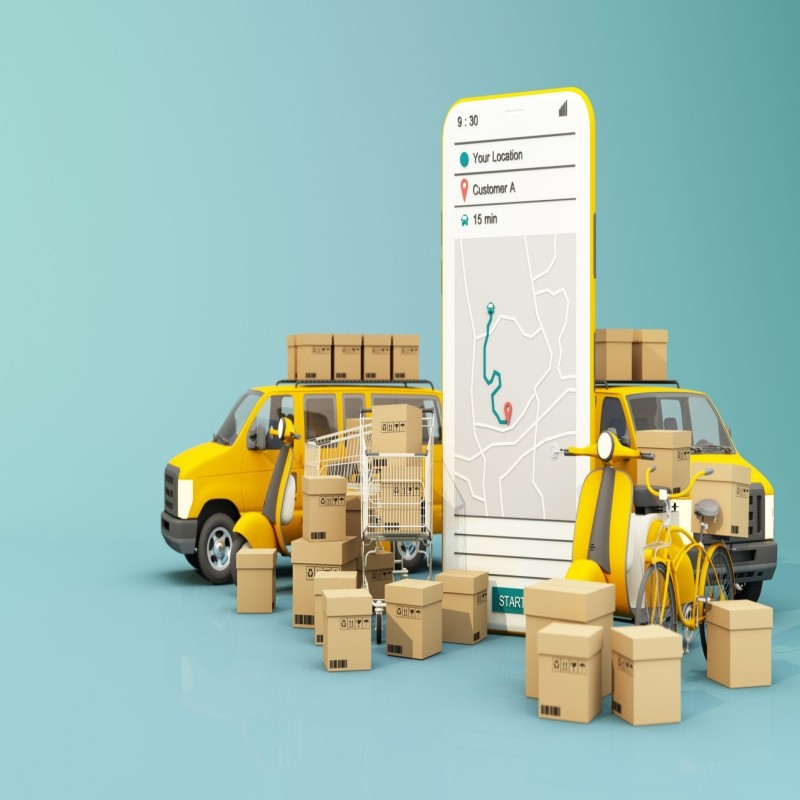
Ever looked at a shipping invoice and wondered why that final, short trip to your customer's doorstep carries such a hefty price tag? You're not alone. For businesses navigating the world of e-commerce and logistics, the "last mile" is more than just a final step-it's the most complex and costly leg of the entire journey. In fact, it can account for a staggering 41% to 53% of total supply chain costs.
So, what makes that last mile so expensive, and what can you do about it? Let's break down the hidden costs and explore how smart logistics isn't just about moving boxes-it's about moving data, expectations, and efficiency.
The Anatomy of a Costly Finale
The last mile is a world away from the streamlined efficiency of cross-country freight. It involves delivering countless small packages to individual doors instead of a few pallets to a warehouse dock. This shift creates a perfect storm of expenses:
- The Labor Labyrinth: This is the single biggest line item. Beyond driver wages, costs stack up from overtime, training, and high turnover rates. Each stop involves navigating traffic, finding parking, and physically handling the package-tasks that are time-intensive and hard to scale.
- The Inefficiency Tax: Unlike highway driving, last-mile routes are stop-and-go. Drivers navigate narrow residential streets, face traffic congestion, and spend crucial minutes searching for addresses and parking. This leads to poor route density-the number of deliveries per hour. Achieving less than three deliveries per hour is considered poor performance, directly inflating the cost of each stop.
- The Domino Effect of Failure: A failed delivery is a double blow. The driver's time and fuel are wasted, and the business incurs the cost of a second attempt, a refund, or a lost customer. The most common reason? The customer simply isn't home.
- The Silent Budget Killer: Returns: The rise of e-commerce has exploded reverse logistics. In the U.S. alone, online return rates can be significantly higher than in-store purchases. Handling a return means absorbing all the original delivery costs while also losing the sale and paying for the item's journey back to your warehouse.
- The "Where's My Order?" Quagmire: In an age of real-time tracking, customers expect constant communication. Without automated systems, fielding status inquiries can consume a massive amount of staff time, adding hidden administrative overhead to every delivery.
Turning Cost Centers into Competitive Advantages
Understanding the problem is half the battle. The solution lies in transforming these logistical headaches into opportunities for efficiency and superior customer service. This is where a partner with the right technology and expertise makes all the difference.
At XMAE Logistics, we believe the last mile shouldn't be a financial black hole. We engineer transparency and control into the process by focusing on a few core principles:
- Intelligence Over Guesswork in Routing: Manual planning can't compete with urban complexity. Our AI-driven optimization doesn't just plot a route; it continuously ingests live traffic data, delivery windows, and driver hours to dynamically sequence stops for maximum density and minimum drive time. This means fewer miles, less fuel, and more deliveries per shift-directly attacking the largest cost drivers.
- Empowering Customers to Reduce Failure: We cut failed deliveries at the source by integrating customer self-scheduling. By allowing recipients to choose a delivery window at checkout, they are far more likely to be home. Our system ensures these windows align with optimized routes, protecting efficiency while dramatically boosting first-attempt delivery rates.
- Proactive Communication as a Cost-Saver: Instead of reacting to inquiries, we keep customers informed with automated, accurate ETAs and live tracking links. This transparency reduces anxiety and slashes the volume of "Where is my order?" calls, freeing your team to focus on higher-value tasks and improving satisfaction.
- Mastering the Returns Loop: We view reverse logistics as an integral part of the delivery flow. Our systems help optimize return pickups by integrating them with outbound delivery routes, ensuring vehicles are productive in both directions and reducing the cost of bringing items back.
- Actionable Insight from Your Data: Cost control requires visibility. Our platform provides dashboards that analyze performance by zone, driver, and route. This helps identify patterns-like a specific suburb with consistently long drop-off times-so you can make data-driven decisions, like adjusting zones or using local pickup points, to reset your long-term cost curve.
The last mile is expensive, but it's not a fixed cost. It's a variable challenge that can be managed, optimized, and even turned into a point of differentiation. By moving beyond traditional shipping and embracing intelligent logistics, you can protect your margins and deliver an experience that keeps customers coming back.
Ready to unravel the math of your last mile? Let's talk about how our intelligent delivery management solutions can help you reduce costs per mile, increase first-attempt success, and turn your final mile into a sustainable advantage. Visit our website to learn more.