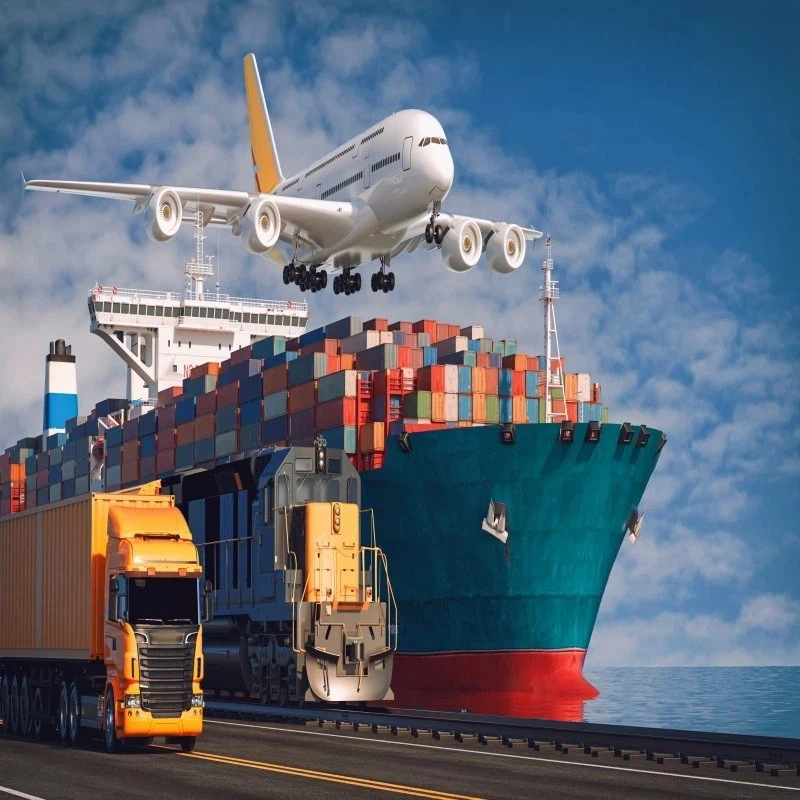
In a bold strategic move that defies conventional industry wisdom, Mediterranean Shipping Company (MSC) continues to aggressively expand its fleet capacity despite clear signals of impending market overcapacity. While other carriers might retreat in the face of declining demand, MSC's relentless vessel acquisition spree has positioned it as the undeniable leader in container shipping, with idle ships remaining surprisingly rare across the industry.
Record-Breaking Growth in Uncertain Times
MSC has officially crossed the 7 million TEU threshold, cementing its lead as the world's largest container shipping line with approximately 21% of global container capacity under its control . This remarkable milestone means MSC now operates about 2.4 million TEUs more than Maersk, its nearest competitor, effectively surpassing the combined capacity of the Gemini Cooperation between Maersk and Hapag-Lloyd .
This unprecedented growth hasn't occurred in isolation. In just 15 months, MSC added roughly 800,000 TEUs to its fleet through a combination of newbuild deliveries and an aggressive second-hand acquisition strategy . The delivery of the Newnew Star, a 3,534 TEU vessel, recently tipped the carrier over the symbolic 7 million TEU mark, bringing MSC's operational fleet to 7,002,757 TEUs .
The Idle Fleet Paradox
Recent data from maritime intelligence company Alphaliner reveals that the idle container ship fleet has remained "virtually unchanged" in recent weeks, despite the onset of typically slower market conditions . This apparent contradiction-where overcapacity fears grow yet vessels remain active-speaks to carriers' current reluctance to idle ships despite market headwinds.
MSC's approach appears particularly strategic. Nearly 20% of its ships are more than two decades old, providing the company with significant flexibility to retire older units if market conditions deteriorate further . This mix of modern newbuilds and aging vessels, combined with a fleet of 688 owned and 267 chartered ships, offers MSC a level of strategic agility that many competitors lack .
Strategic Capacity Adjustments Amid Demand Shifts
Rather than wholesale idling of vessels, MSC has demonstrated a more nuanced approach to capacity management. The company recently announced adjustments to its Asia to USA network, blanking specific voyages on its EMPIRE and AMBERJACK services in weeks 46 and 48 .
This selective reduction strategy reflects MSC's response to what it describes as "significant下滑" (significant decline) in demand for Chinese goods on the US West Coast . In some cases, the company has taken more dramatic measures, such as immediately "suspending" its trans-Pacific to US West Coast SEQUOIA航线 (SEQUOIA route) .
Weathering the Coming Storm
With a sizable orderbook of another 2 million TEUs waiting in the wings-much of it focused on energy-efficient and alternative-fuel designs-MSC shows no signs of slowing its expansion . The company's dominance continues to reshape global shipping dynamics, with more than 955 ships already in service and hundreds more to come .
Industry analysts warn that a prolonged capacity glut could persist until 2030, potentially pressuring freight rates and sparking renewed rate wars similar to those seen after 2009 . As new vessels flood the market and demand growth slows, carriers may soon find themselves competing not for market share, but for cargo to fill their ships.
The Bottom Line
MSC's strategy of doubling down on vessel acquisitions despite overcapacity concerns represents a calculated gamble that the company is uniquely positioned to execute. Its diverse fleet profile, combining state-of-the-art newbuilds with older vessels ready for retirement if needed, provides a cushion that single-profile fleets lack.
While the industry holds its breath awaiting potential market corrections, MSC continues to widen its lead, betting that scale and strategic flexibility will ultimately prevail where caution might yield only modest protections. As one industry observer noted, carriers still seem "unfazed by impending structural overcapacity" as MSC continues its growth trajectory with vessel idling remaining remarkably low .
The coming months will test whether MSC's aggressive expansion proves visionary or overly ambitious, but for now, the world's largest container line continues to sail full speed ahead into uncertain waters.