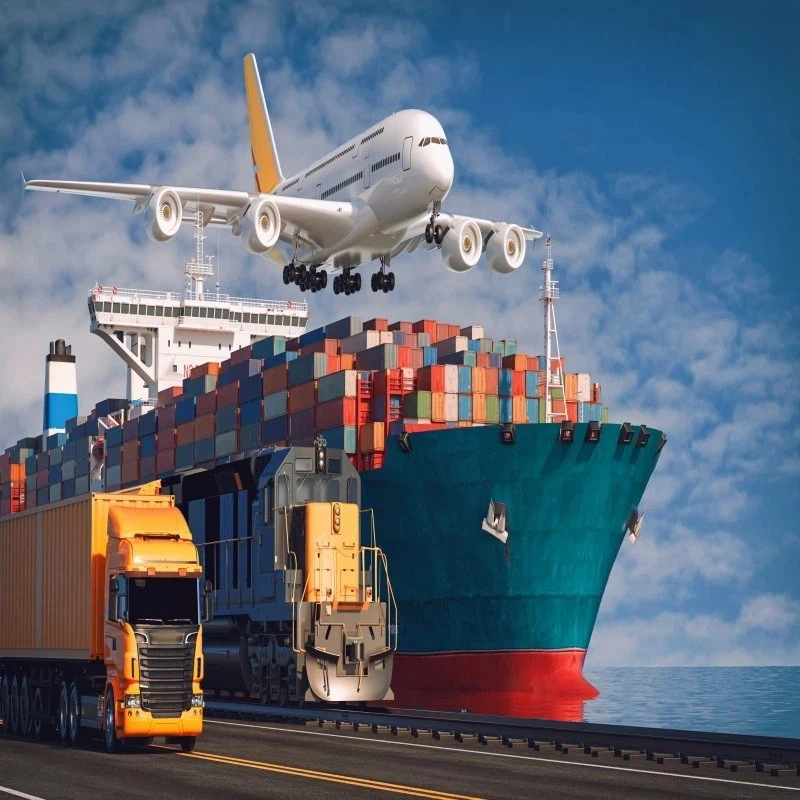
If you've been trying to book a container from China to Mexico lately, you've probably had a few sleepless nights.
Rates are climbing. Space is tight. And every carrier under the sun seems to be launching a new service to Mexico's Pacific coast – yet somehow, that hasn't made things any easier.
The Numbers Don't Lie
Mexico's logistics landscape is undergoing a transformation that few saw coming just a few years ago. The nearshoring wave – companies moving production closer to North American markets – has turned Mexico into a magnet for Asian imports. In the first half of 2025 alone, Asian imports into Mexico surged to an all-time high of USD 132.19 billion, accounting for 42.5% of the country's total imports.
The ports are feeling the heat. From January to May 2026, Mexican ports moved 4.02 million TEUs, a 4.4% increase compared to the same period last year. Pacific ports handled 3.10 million of those TEUs, up 8.5% year over year, while Gulf-Caribbean ports actually saw a 7.3% decline. The message is clear: the action is on the Pacific side.
Manzanillo, Mexico's largest container port, moved 1.74 million TEUs between January and May – a 9.2% annual increase. And Contecon Manzanillo, the terminal that handles a huge chunk of that volume, recently hit a historic milestone: 12 million TEUs mobilized since it started operations. In the last four years, imports from Asia – especially China – have grown more than 70% at the terminal.
Carriers Are Rushing In – But Rates Keep Climbing
You'd think all this attention would mean more capacity and lower rates. Think again.
MSC, CMA CGM, and Cosco have all launched new transpacific services to Mexico's west coast in recent weeks. Cosco started a weekly service linking Busan, Dalian, Qingdao, Shanghai, Ningbo, and Yokohama with Ensenada, Manzanillo, and Lazaro Cardenas. CMA CGM announced a weekly service with eight vessels. And MSC just unveiled a new standalone shuttle called the Dahlia service, starting 3 August from Shekou via Xiamen, Shanghai, and Busan to Manzanillo and Lazaro Cardenas.
But here's the kicker: all that new capacity hasn't made a dent in the upward momentum of rates. According to Eternity Group Mexico's EAX index, rates for 40ft containers surged 55.5% in May over April, which itself saw a 56.9% increase over March. Rates climbed 50.2% in January alone. The Shanghai-Manzanillo freight rate is currently sitting at $6,164 per 40ft – that's higher than the $5,279 into Long Beach and $5,203 into Vancouver.
Shipping lines have blamed container shortages – especially of 40ft units – at Asian ports. But the real driver is simple: demand is outstripping supply. Importers have been struggling to get confirmed space on vessels out of Asia, despite paying market rates.
What's Driving the Boom?
The nearshoring trend is the obvious answer. US companies are moving production to Mexico to avoid tariffs and shorten supply chains. But there's another layer to this: some analysts believe Chinese exporters are using Mexico as an alternate gateway to the US, avoiding punitive tariffs. As Xeneta's chief analyst Peter Sand put it: "Is this the ugly face of the tariff wars? For example – are the Chinese building up strategic stocks of manufactured goods around the world?"
Whatever the reason, the result is the same: Mexico's Pacific ports are bursting at the seams, and shippers are paying a premium to get their cargo through.
This Is Where Experience Pays Off
Navigating a market this chaotic isn't for the faint-hearted. When carriers are launching new services, blanking sailings, and shifting capacity on a whim, you need more than a booking confirmation – you need a partner who knows how to secure actual space.
At Xiamen AE Global, we've been moving freight through exactly this kind of turbulence since 2018. We're a government-licensed company with IATA, FIATA, FMC, and NVOCC credentials – which means when a trade lane heats up like the Asia-Mexico corridor, we have the global network and the carrier relationships to get your containers on board.
Relationships That Deliver
With over 100 overseas agents worldwide, we don't just watch the market from a distance. We work directly with our partners on the ground to understand what's really happening at each port, with each carrier, on each service. When MSC launches a new shuttle or CMA CGM reshuffles its fleet, we know about it – and we adjust our clients' routing strategies accordingly.
Technology That Cuts Through the Chaos
We've invested heavily in technology that gives our clients real visibility into their shipments – not just a tracking number, but actual insight into what's happening with capacity, schedules, and alternatives. When a port gets congested or a sailing gets blanked, we don't wait for you to find out the hard way. We alert you immediately and present options.
Local Knowledge Where It Counts
Based in Xiamen – one of Asia's busiest port cities and a key hub for the new services heading to Mexico – we combine the global reach of an IATA and FIATA-approved forwarder with the local knowledge of a partner who's been shipping all kinds of goods for over a decade. We've moved over 12,000 TEUs in a single year with a 98.6% on-time delivery rate for our SME clients. That's not luck – it's relentless execution and a network that doesn't fall apart when the market gets complicated.
The Bottom Line
Mexico's Pacific ports are booming, and that's not going to change anytime soon. The nearshoring trend is real, the tariff wars are ongoing, and Asian imports keep flowing. But with boom times come congestion, rate spikes, and capacity crunches.
At Xiamen AE Global, we don't just move boxes. We turn market complexity into competitive advantage. Because when you're trying to get a container from China to Manzanillo in a market where rates are hitting $6,000 per 40ft and space is tighter than ever, what you really need is someone who knows which strings to pull – and when to pull them.
Ready to navigate the Asia-Mexico boom with a partner who's got your back? Contact Xiamen AE Global today for smart, flexible logistics solutions that keep your cargo moving – no matter how hot the market gets.